
Bangkok’s rebel chef: Gaggan Anand
Bangkok is famous for its vibrant street food, but its world-class fine-dining scene is just as impressive. Step inside Gaggan Anand’s iconic restaurant and discover the visionary chef redefining modern Indian cuisine with creativity, theatre, and unforgettable flavours.
If this is on your ‘things-to-do-in -bangkok ’ list, you are in the wrong restaurant.”
Chef Gaggan Anand starts every service at his 14-seater restaurant in Bangkok with a version of this warning, delivered at high volume.
There are a million clichés about Thailand’s capital. It has been so over-represented, when you first see it, it feels like a movie set. I keep seeing visions of Rutger Hauer and people eating noodles in the rain. There are the cluttered pavements, vendors with baskets on poles, the vibration of a million motorbikes, the TukTuks, the temples, the heat, the skyscrapers and billboards in the city centre, the tangle of exposed electric cables littering the sky over sidestreets.
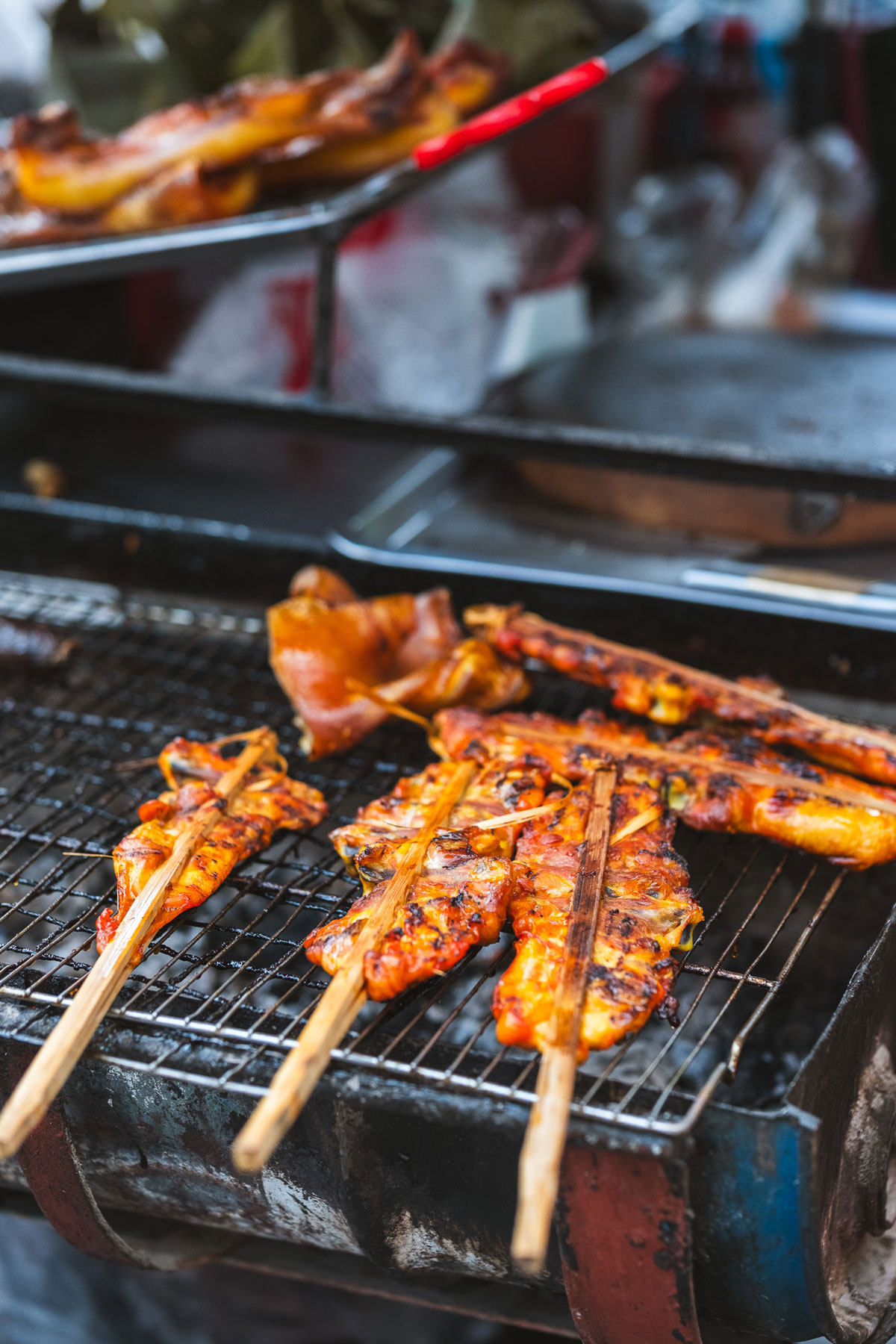
But more than anything else, there is the street food. Everywhere you look. The streets smell of the deeply savoury stock simmering for boat noodles and the sweet smokiness of moo ping (pork skewers). At lunchtime, locals line up on crates on the pavement, heads bent over bowls. Every moment on the street is a souvenir of food culture. But what is less well-known, perhaps, is that Bangkok is also a serious player in global fine-dining.
The city has 43 restaurants with Michelin stars (55 stars between them), six entries on the World’s 50 Best Restaurants list (on par with Tokyo for the most in the Top 50) and home to the current best female chef, Pichaya “Pam” Soontornyanakij of Potong in Chinatown.
Chef Pam delivers a highly personal tasting menu inspired by her Thai-Chinese heritage out of a narrow, five-storey building that was once her grandparents’ home and Chinese medicine pharmacy. Her mission is to save traditional ingredients from being forgotten while creating a new genre, so we are served perfectly lacquered 14-day-aged duck, but also fish swim bladder (fish maw) and noodles stuffed with pork tongue.
But most importantly, for this story, Bangkok is the adopted home of fine-dining anti-hero and the most famous Indian chef in the world, Gaggan Anand.
He doesn’t like this label. “I don’t like that pressure,” he says, “I am among the most famous chefs in the world, who happens to be Indian. That is better pressure.”
A few days before eating at Gaggan, we’re invited to brunch at his home. This is unusual, but Gaggan has a special connection with South Africa. Last year, he hosted a sold-out collab dinner with chefs Ryan Cole and Nina du Toit at Salsify at the Roundhouse in Cape Town. (He frequently does pop-ups and residencies in other countries.) It left an impression. “There’s so much Indian influence in your cuisine,” he says, “I loved Cape Town. Beautiful people, amazing culture and amazing food. And it’s so underrated.”
To call Gaggan a mad genius would be underselling him: he is unpredictable, high-octane and deliberately provocative; prone to hyperbole and frequent use of the F-word. Most often dressed like the rock star he once dreamt of being, he accessorises Foo Fighters T-shirts with luxury watches, collects vinyl, owns two Porsches and an Alaskan Klee Kai dog named Matcha. So, Ryan says: “When he said, ‘Come and cook with me in Bangkok!’, we thought, yeah right.” But then, here we are.
The table is set with bowls piled with aromatic leaves, two kinds of Thai larb, sticky rice and fragrant nam jim jaew dipping sauce. Gaggan’s head chef, Fabio, is grilling Thai coconut chicken on the Ikea gas braai, while another chef, Gus, stirs a fiery broth on the stove. It’s one of the best meals of the trip. Opening his home to us is an act of real generosity and faith; it is also a prelude. Two days later we meet the man behind the curtain.

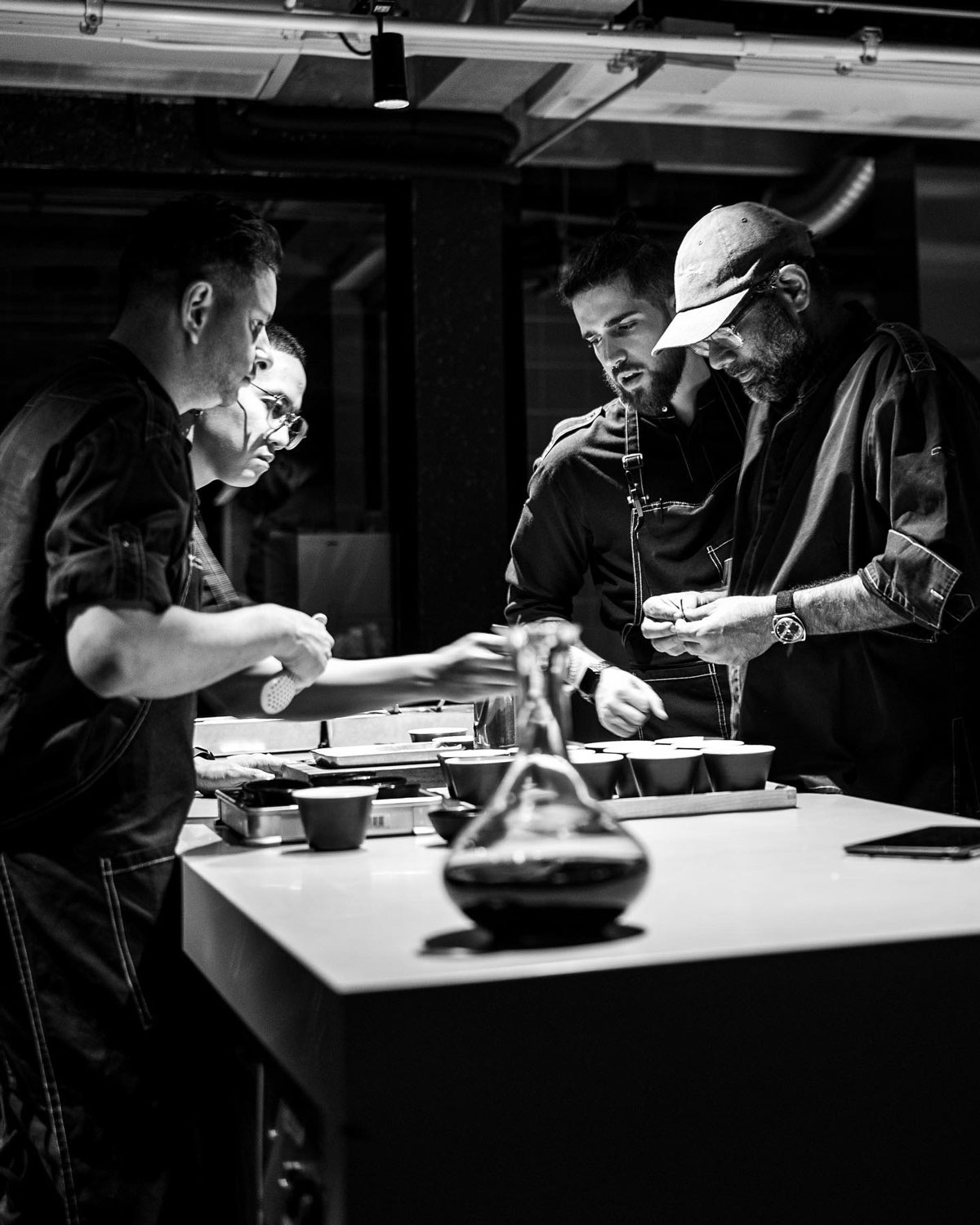
“Do not expect a comfortable meal!” Gaggan yells after what feels like a very long “delay” before we are served anything. The soundtrack to the interminable wait is 90s metal band Tool, playing very, very loudly (I had to Shazam that). We sit in the red-neon-lit, industrial-steel space at an L-shaped chef’s table facing the central pass where the team is huddled over dishes, pointing and speaking in low tones. The apprehension is palpable.
Then come the rules. No breaks for the first hour. After that, only two five-minute bathroom breaks. (The meal could take up to five hours.) Pictures are okay, but no flash. In fact, we are one of the last seatings who will be permitted to bring in phones at all.
When I ask, months later, if he stuck to this, he says: “We did! We spend so much time converting an ingredient into food that is edible, there is no justice when these f^&#ing TikTokkers come to our restaurant and…” he breaks off and qualifies: “I understand we get the value of that social media, but we’ve lost the manners of being in a restaurant. So, I’m an old fucker trying to teach them manners.”
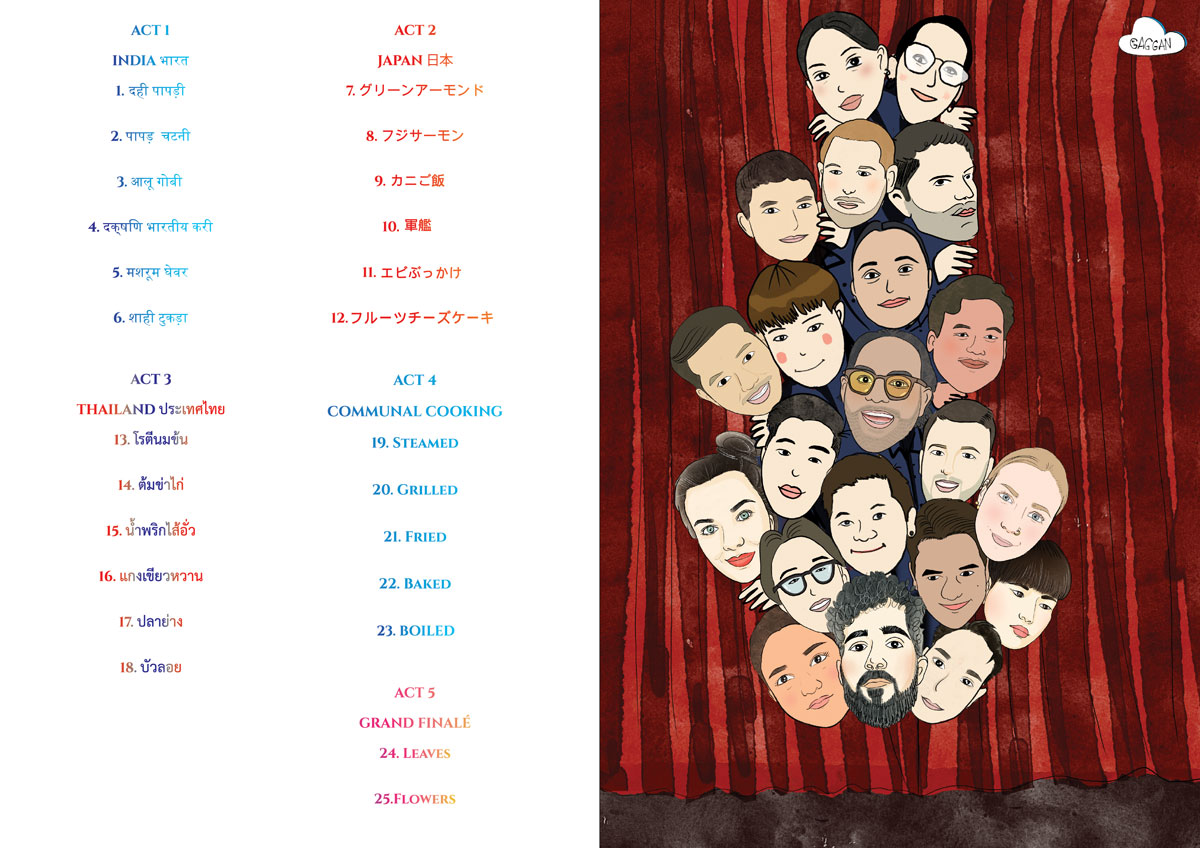
Back in Bangkok, the old fucker is explaining the menu: “There will be five stages. Indian. Thai. Japanese. Communal. And the finale. Five dishes in each of the four stages. Five different colours, five textures and five f^&#ing photographs!” The yelling is the equivalent of Ralph Fiennes’ deafening clap at the start of each course in The Menu.
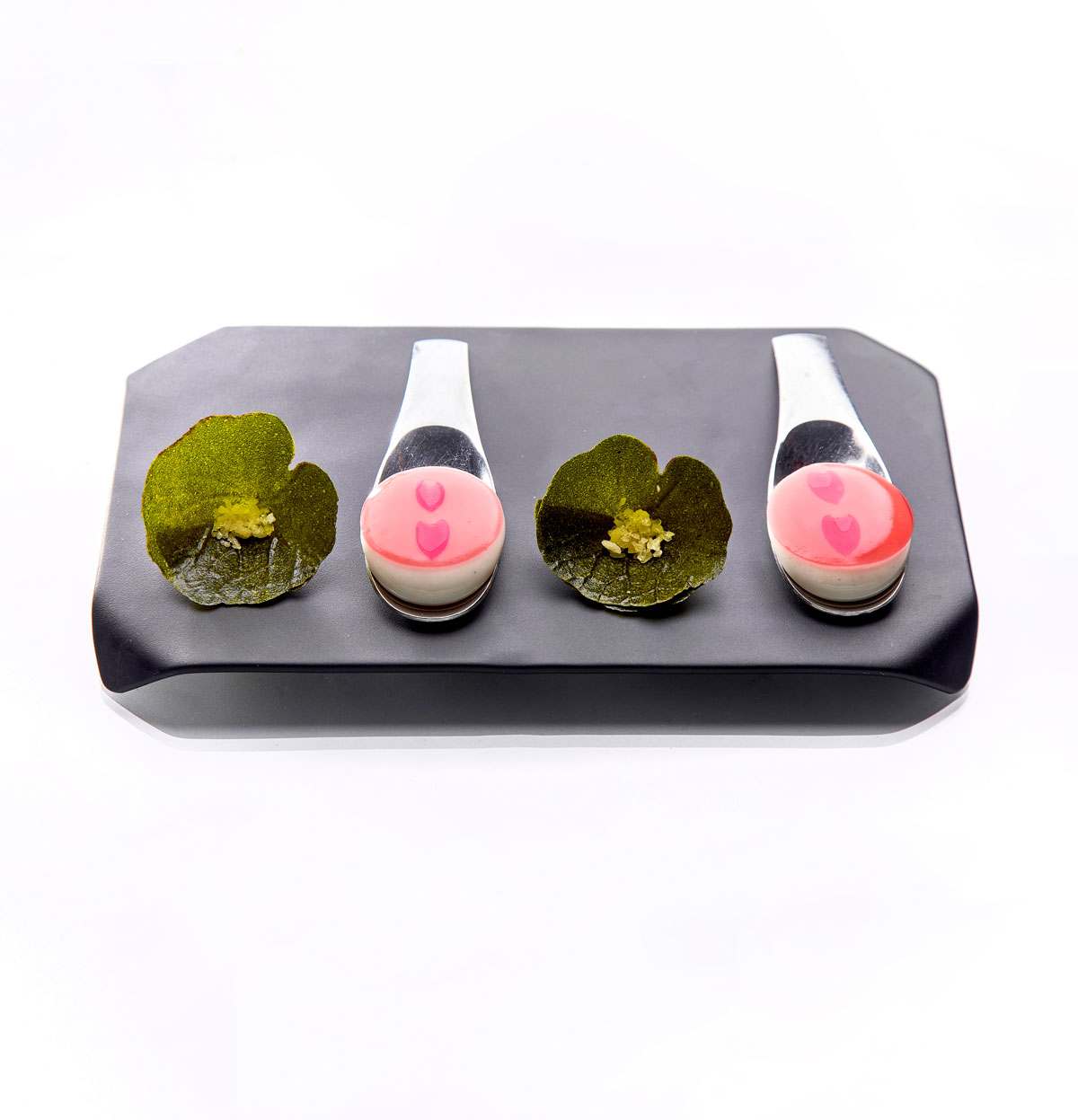
“We want this to feel like the Last Supper!” It is so intentionally theatrical I’m convinced the food can’t possibly live up to its own hype. Then two dishes are placed in front of us. One contains a miniature lily pad, the other is a spoonful of something white and smooth – like a glistening pebble. We hold the leaf as a chef tips the quivering sphere into it and eat it in one bite.
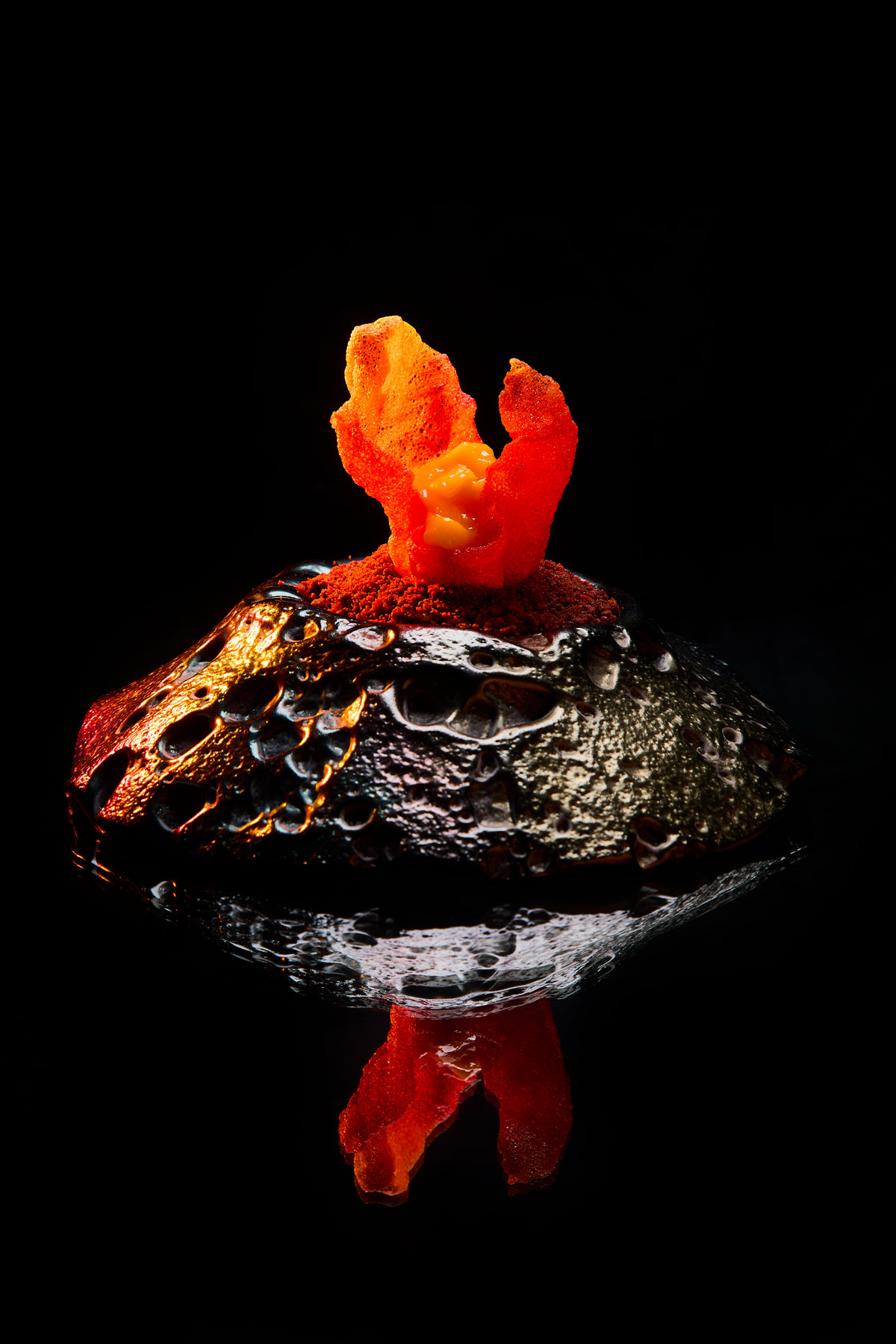
The impossibly fine membrane breaks releasing a mouthful of liquid yoghurt infused with the flavours of Indian chaat and vibrating with popping candy. The “yoghurt explosion” is one of Gaggan’s signature dishes, as featured in his episode of Chef’s Table in 2016, the moment that propelled him into the public’s consciousness. It was inspired by his stint at the famous El Bulli lab in Spain in 2010. And by the time he serves us the fourth “bite” – a mouthful of creamy scallop curry inside its own shell – I’m in a totally different restaurant, this one high above the Cala Montjoi, surrounded by Picasso cypresses, eating food I struggled to describe, 21 years ago. I am back at El Bulli.
That long-ago meal, which I had years before I worked in food media, was a pilgrimage that forecast my career. And I always believed that I’d never be able to recapture the feeling I had that night, that it was like falling in love for the first time. But I was wrong. And even more than that, and in spite of my older self’s initial scepticism, I find Gaggan’s dishes more delicious.
“It was like a punk band,” he says cryptically when I tell him this. “It was very experimental. They invented eight or 10 techniques each season and did five dishes using each technique. But because I’m a man from Asia and have strong roots in my cooking, I’ve taken those techniques and made them tastier, more approachable. We, as Asians, have been exposed to wider tastes. The exposure we have in Asia is huge.”
Gaggan was born in Kolkata in 1978 into relative poverty. He calls himself a “Xennial”, the hybrid generation between X and millennial, who grew up with analogue music and are the last to remember a time before the internet. Music and the “analogue” process are important influences in his world. Avoiding spoilers, rock music, in particular, is a big part of the Gaggan experience, for one. For another, he believes that having witnessed technology progress from cassettes to disc to streaming is a metaphor for how chefs should evolve. “We’ve seen the change, we understand. Everybody starts with the f^&#ing fermentation, or foraging. Or another trend they find fancy. Look at the cocktails. We have single handedly made cocktails a fucking disaster! Why do we have to drink cocktails that taste like food? Why do you have to smoke an olive in bacon fat?”
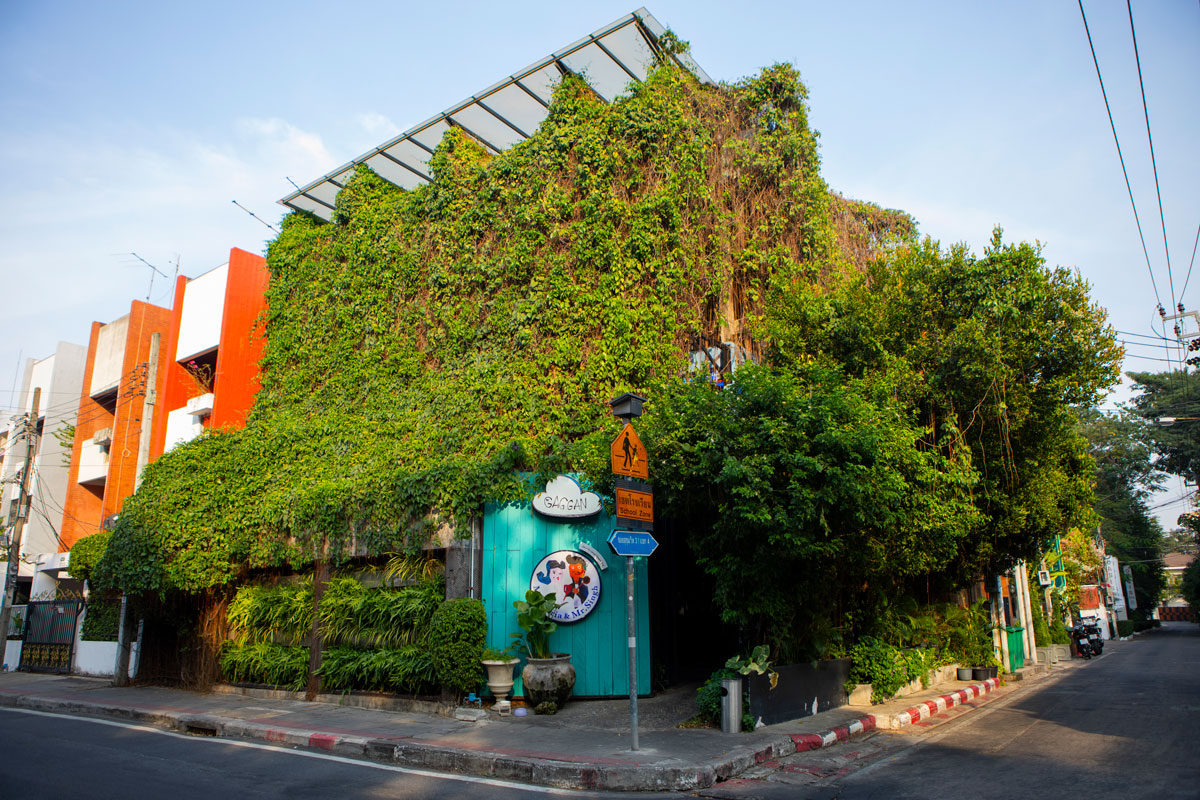
There are no cocktails at Gaggan. Instead, there is an exceptionally considered wine pairing by sommelier Vladimir Kojic, who is also Gaggan’s business partner, together with Indonesian-born Rydo Anton who heads up his kitchens. He also owns a steakhouse, Meatlicious, the more casual, Mexican-Indian restaurant directly above Gaggan called Ms Maria and Mr Singh, which is the location for chefs Ryan and Nina’s Bangkok pop-up, and the collab Gaggan at Louis Vuitton.
Mild-mannered, Serbian-born “Vlad”, as everyone calls him, seems an unlikely partner for Gaggan, and that’s likely why it works. Everyone needs a Vlad in their corner and no one more than Gaggan, who famously split from his previous partners in 2019, walking away from nine years of brand-building and success. At the time, the restaurant Gaggan had two Michelin stars and had been voted the World’s Best Restaurant in Asia for four years running. It was number four on the Worlds 50 Best list. When he left, under something of a cloud, all but five of the team went with him.
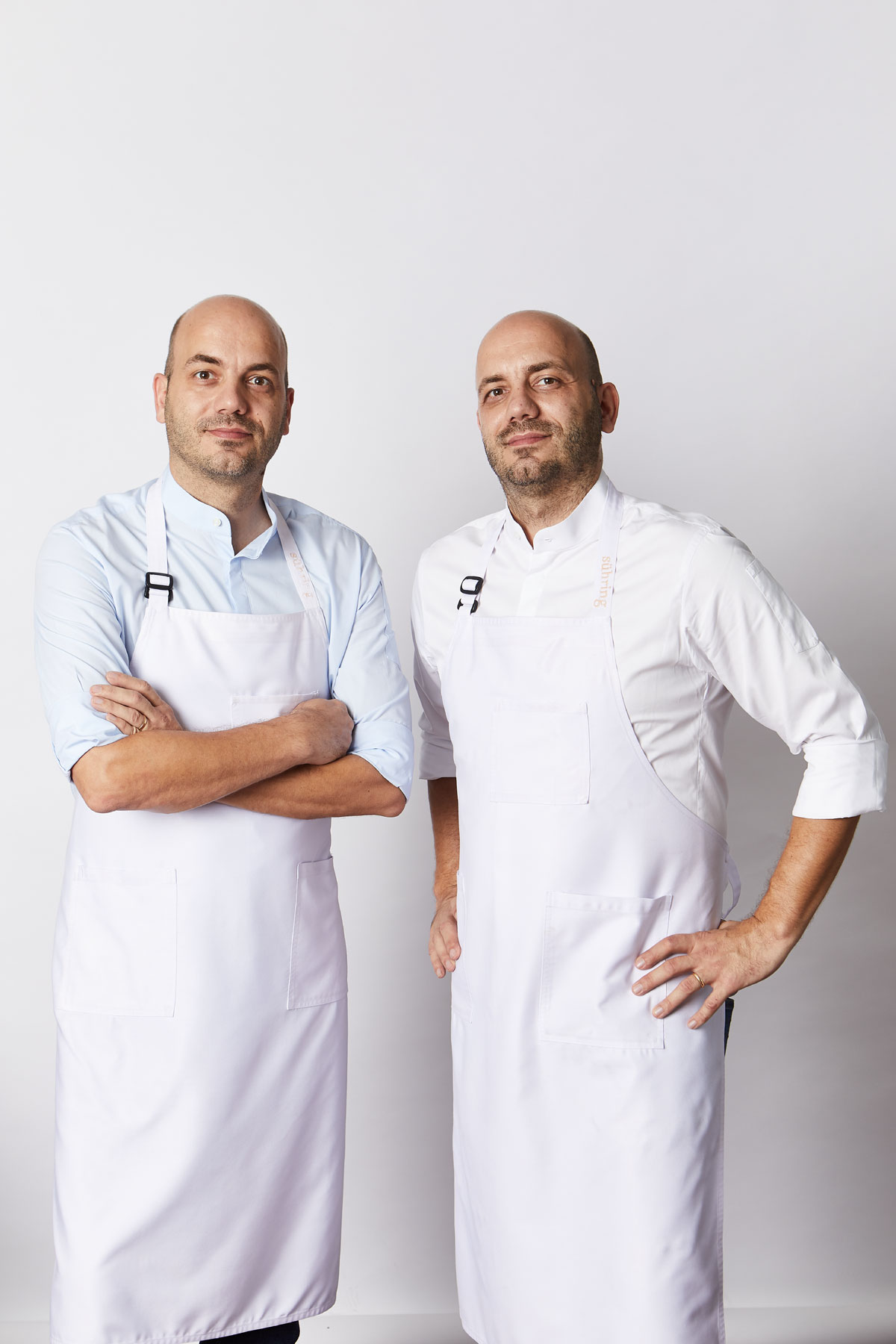
When he and his investors parted ways he lost the rights to the name Gaggan (which had been registered without his knowledge), but reopened just a few months later in the present location as “Gaggan Anand”. In 2024, after a five-year legal battle, he won back the rights to his name and, last year, Gaggan reclaimed the number one position in Asia. When I ask how he feels about the fact that Sühring, a fine-dining restaurant that he helped finance, has just been awarded three stars, when Gaggan has only one, he says: “Have you seen the crowd in those three-star restaurants? They don’tbelong in our restaurant.”
Still, he admits to aspiring to reaching number one on the World’s 50 Best list, a more populist accolade.
“I want to do it because it’s like climbing an Everest, right? It’s a milestone that at least one guy from Asia could do it. If I’m number one in Asia four times and then, giving up everything I had, and reclimbing [the list], showing my worth, I think I have a shot at it.” While in Bangkok, we also eat at Sühring.
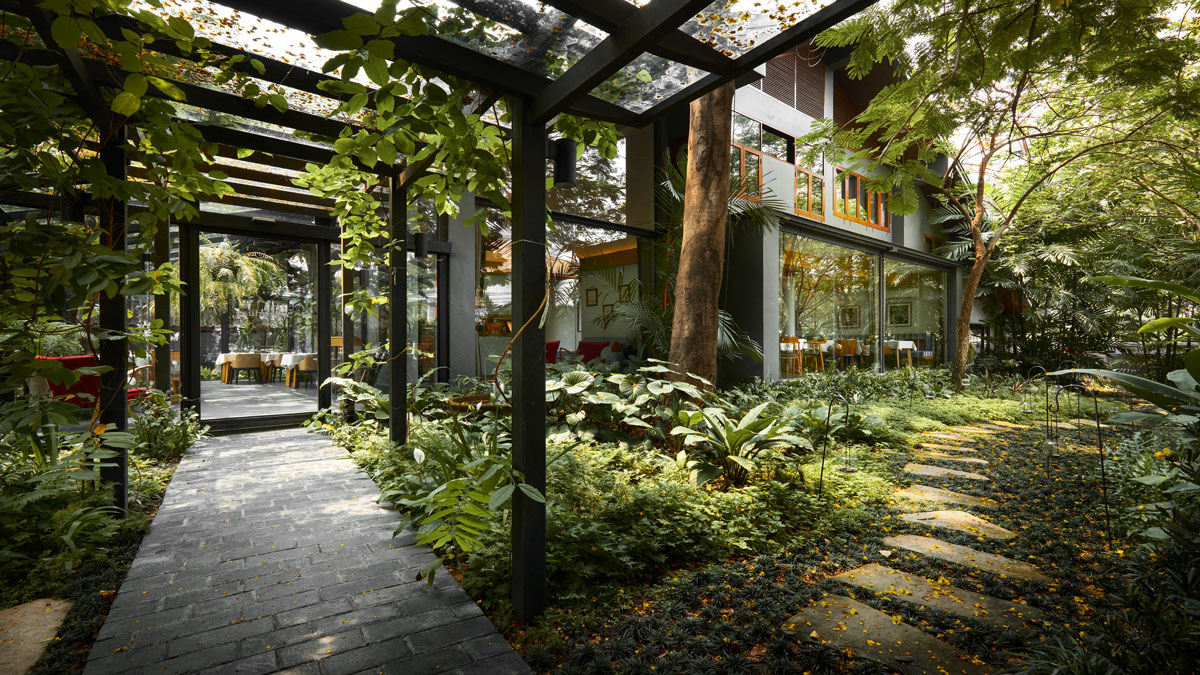
It is technically astonishing, with a level of service I’ve never experienced anywhere else, but it is also incongruous. The German-born Sühring twins serve precise, and even ingenious, but very European cuisine out of a converted villa with mid-century leanings. It is welcome respite from the city outside, seething with heat and noise, sweating in the steam from hundreds of noodle pots. It is also the polar opposite of Gaggan. It is comfortable. “Everything is deliberate. Everything is planned to make sure your meal is completely uncomfortable,” Gaggan says of the pre-dinner wait, the shouting, the rules, the bizarre stories he tells before some of the courses. He claims one dish is the brain of a water monitor lizard sourced from Lake Lumpini. He used to say it was a rat’s brain until a diner who was a vet pointed out that it was too large to have come from a rat.
This fabrication is a swipe at restaurants professing to be sustainable when no one holds them to account. “We’ve gone from street to table to lake to table,” he says. The irony is the dish is actually brains; it is goat’s brain green curry in a lizard-sized mould. It is also delicious. “We told everybody that it’s a f^&#ing lizard brain, and half of them trust me!” he laughs delightedly. “The brain is a butter! I call it the Indian foie gras. But that’s the provocation, how you present it.
“It is the uncertainty,” he continues, “I want them to feel the mystery. It’s like a Disney ride. Pure adrenaline rush. I’m tying you in, I’m making you safe, but I’m pushing you to your limit. You know it’s not going to be comfortable, but it will be exciting until the end. We want to entertain you with discomfort. That’s the thing you can’t match. We risk our lives, we risk our name, we risk our rewards, we risk our reputation for that moment.”
He exaggerates a lot, but he’s not exaggerating when he talks about risk. In many ways he is still the kid from Kolkata, tongue stained red from eating forbidden candies, who disobeyed his parents and ate everything he could lay his hands on between home and school. After finishing his studies in Kerala, he dropped out of hospitality training at a prestigious hotel group and worked in mass catering before hearing about a restaurant called El Bulli in Spain. He called them 20 times, every half hour, and was the first Indian chef to be accepted for an internship. He spent one day at Noma and claims he “didn’t belong” but when pressed he says, “For me, René was a hero and the hero let me down, so I never became a part of it.”
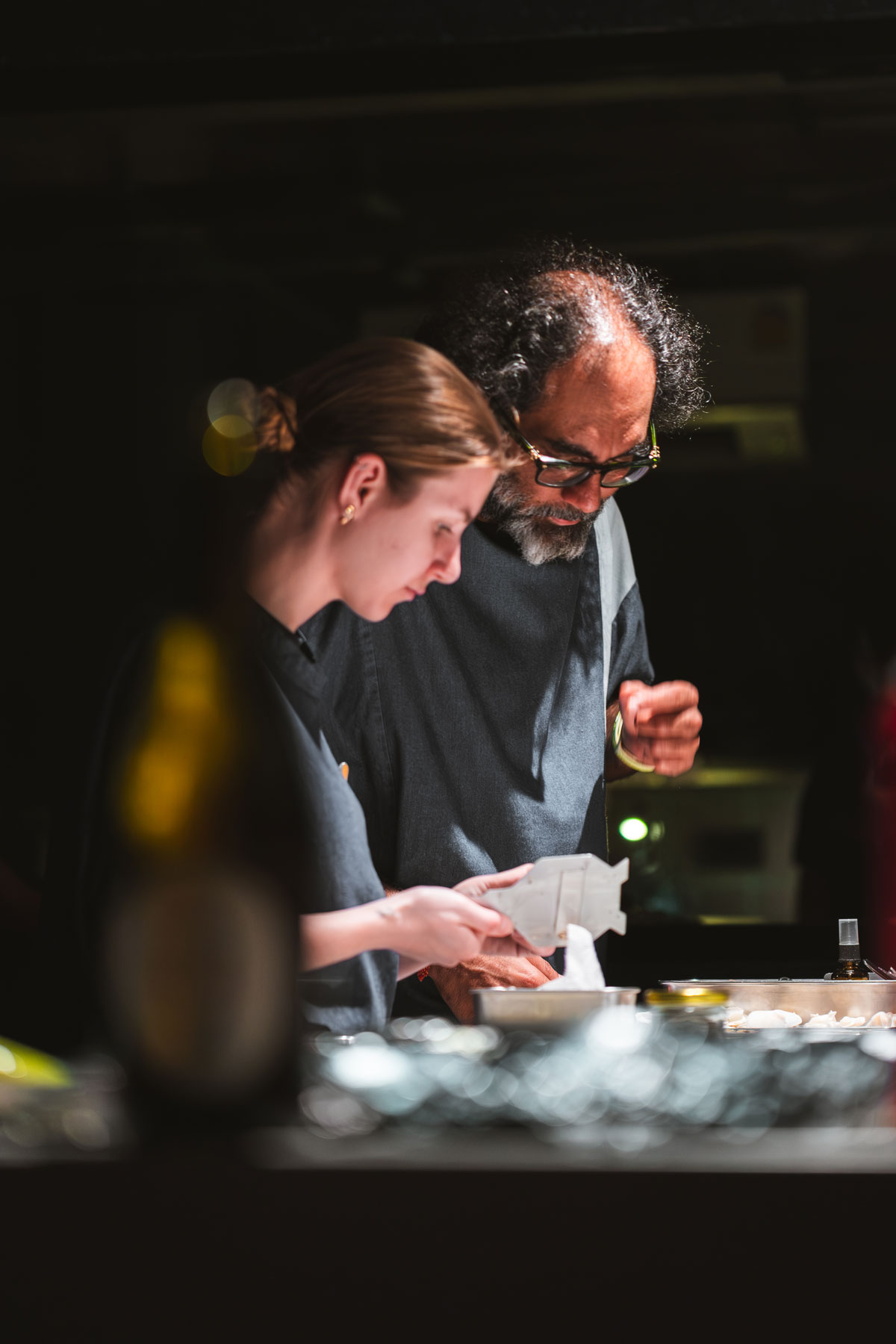
In his first kitchen in Bangkok, before Chef’s Table, he drew a literal line in chilli powder between himself and the restaurant owners, insisting on creative independence. He says he is stubborn, not arrogant, but sometimes the single-mindedness backfires: “We were serving a dish and a group of five people left. They just didn’t like us. They didn’t belong. We were speechless, it was heartbreaking,
but we had to gather our spirit and increase the energy in the kitchen so the other nine can enjoy.”
Several times during our meal, Gaggan introduces a chef and lets them take the stage. At least two of these chefs are women and there are more on his team. He invested in Restaurant Gaa, helmed by former sous chef Garima Arora, who spent three years at Noma. “My success is from my team and if I don’t treat them well…” he trails off. “Building a team is not an HR process. I hate HR books. You build a family, and in a family nobody teaches you how to be a mom. You are a mom.”
He refuses to give interviews to those who haven’t eaten at Gaggan. “I as a person, am always a mystery,” he says, mysteriously, “Every interview I give hints, but I will never give you the real answer. Because the real answer is only when you come and eat it. Where is the justice of what I imagined if you can write it without eating it? If I’m just doing it for the sake of the interview, then I am not me. That’s why I have become this personality of this…eccentric artist."
I ask if he think he’s the same person he was before he became famous. His answer is like a line from Dr Seuss: “I think I am this person, until I perform. And when I perform, then I become who I am.” Wgaggan.com

Comments