
Egg replacements in baking: A guide for home bakers
Whether you’re vegan, allergic to eggs, or simply ran out mid-recipe, egg replacements in baking are more accessible and effective than ever. Eggs play multiple roles in baking: binding, leavening, adding moisture and richness, so understanding how to replace them depends on the function they serve in your recipe.
The role of eggs in baking
Eggs typically:
- Bind ingredients
- Leaven (help baked goods rise)
- Add moisture and richness
- Contribute to structure and colour
- No single substitute can do it all, but the right alternative can deliver great results depending on what you're baking.
Common egg replacements and when to use them
How to use flaxseed meal as an egg substitute
Flaxseed adds a nutty flavour and acts as a good binder in muffin, pancake and brownie recipes. Use 1 T ground flaxseed + 3 T water (allow the mixture to stand for five minutes) as a substitute for one egg.
How to use chia seeds as an egg substitute
Chia seeds provide excellent structure in cookies and quick breads. They also have a neutral flavour. Place 1 T chia seeds in 3 t water (allow to stand for 10 minutes), as a substitute for one egg.
How to bake with apple sauce instead of eggs
Apple sauce is slightly sweet and adds moisture. It’s an ideal substitute when baking cakes or muffins. And it's easy to use: simply substitute ¼ cup apple sauce for one egg.
Banana as an egg substitute in baking
To substitute one egg for banana, use ¼ cup mashed banana. It adds density as well as a strong banana flavour, so it’s best used in brownies or muffins when you might want additional sweetness.
Yoghurt as an egg replacement
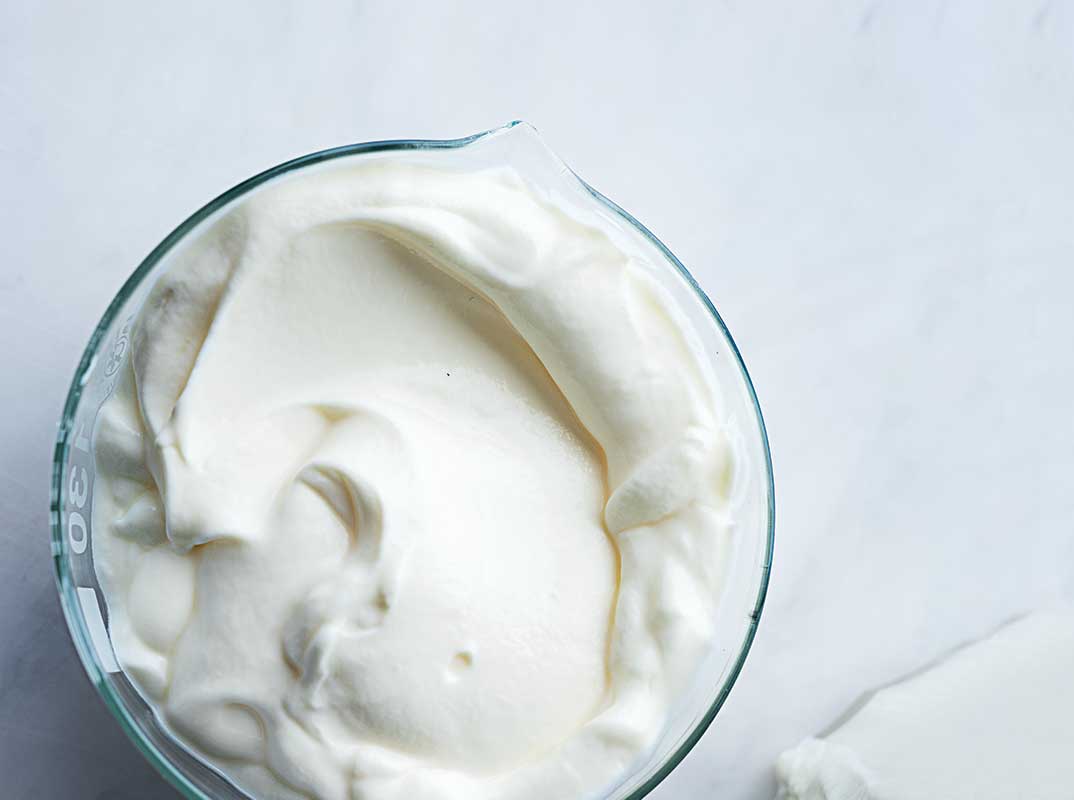
You can use dairy or non-dairy yoghurt in cakes or cupcakes. It provides moisture and richness but has no leavening qualities. Substitute ¼ cup yoghurt for one egg.
How to use aquafaba (chickpea brine) as an egg substitute
Aquafaba is ideal in bakes that require whipped egg whites, such as meringues, macarons and light cakes. Simply use 3 T in place of one egg.
Bicarbonate of soda and vinegar egg replacement
Bicarbonate of soda plus vinegar is useful as an egg replacement for when you need a leavening agent. In place of one egg, use 1 t bicarbonate of soda plus 1 T vinegar to make cupcakes and cakes.
My egg-replacement testing process
TASTE’s deputy food editor, Khanya Mzongwana, took to her own kitchen to put these substitutes to the test. How did they stand up to her rigorous testing?
Aquafaba
Recipe tested: Vanilla bean stewed stone fruit Eton mess
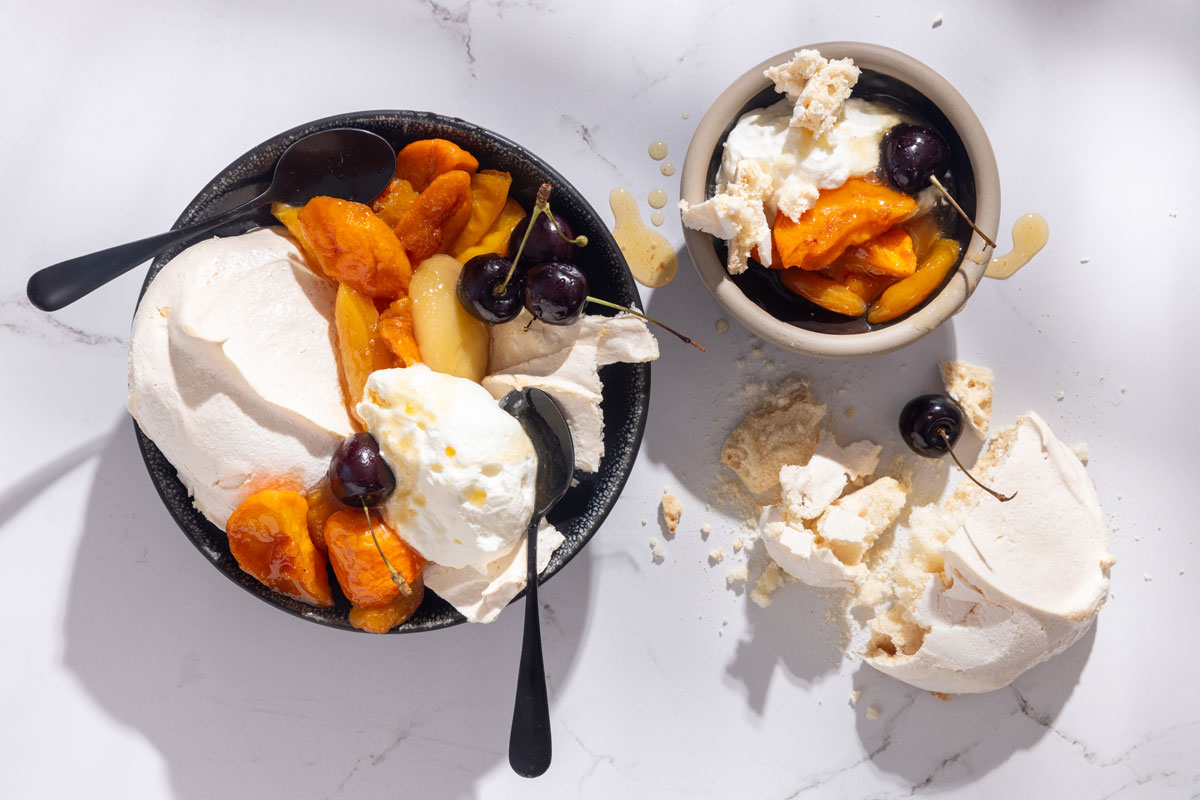
Vanilla-stewed stone fruit Eton mess recipe
I’m excited to report on this one! It made such a high-quality, delicate meringue with an earth-shattering crunch. I was blown away once it reached those stiff peaks with the consistency, silkiness and viscosity of real egg whites. It also whipped into stiff peaks in roughly the same time as egg whites would. If you’re wondering whether it tastes like chickpeas, it does not. Not remotely.
Curious about who first made this mind-blowing discovery? So was I.
In late 2014, an experiment by French musician Joël Roessel set the stage for a revolution in vegan baking. While tinkering with the liquid drained from canned beans, Roessel discovered it could be whipped into airy foams, behaving much like traditional protein isolates. He posted his findings online, complete with recipes for a floating island, chocolate mousse, and meringue, proving that humble chickpea water held serious culinary promise. At roughly the same time, across the Atlantic, vegan food enthusiast Goose Wohlt took things a step further. He realised the same liquid could stand in for egg whites, no stabilisers required. By March 2015, Wohlt had published a simple recipe for egg-free meringues made with nothing more than chickpea water and sugar, a revelation for plant-based bakers everywhere.
My rating? 10/10! I urge you to give this one a try.
Chia seeds mucilage
Recipe tested: Blood orange chia seed muffins

Blood orange chia seed muffins recipe
I love chia seeds in baking, so coming up with a good recipe to incorporate them organically was a cakewalk. They function as a binding agent in this recipe, also providing much-needed moisture and great texture. To make the mucilage, you need to crush the chia seeds, but I left mine whole and somehow it still worked out well. The muffins rose beautifully, too. They do come crashing down a bit once they cool but remain soft and fluffy in texture. (The chia seeds are not a raising agent; I also used baking powder in this one.)
My rating? I rate it a solid 8/10 as a binder, or maybe 8.5/10 because of the gorgeous, nutty texture and moisture it added to these muffins.
Plain yoghurt
Recipe tested: Preserved lemon sesame cake with cream cheese frosting
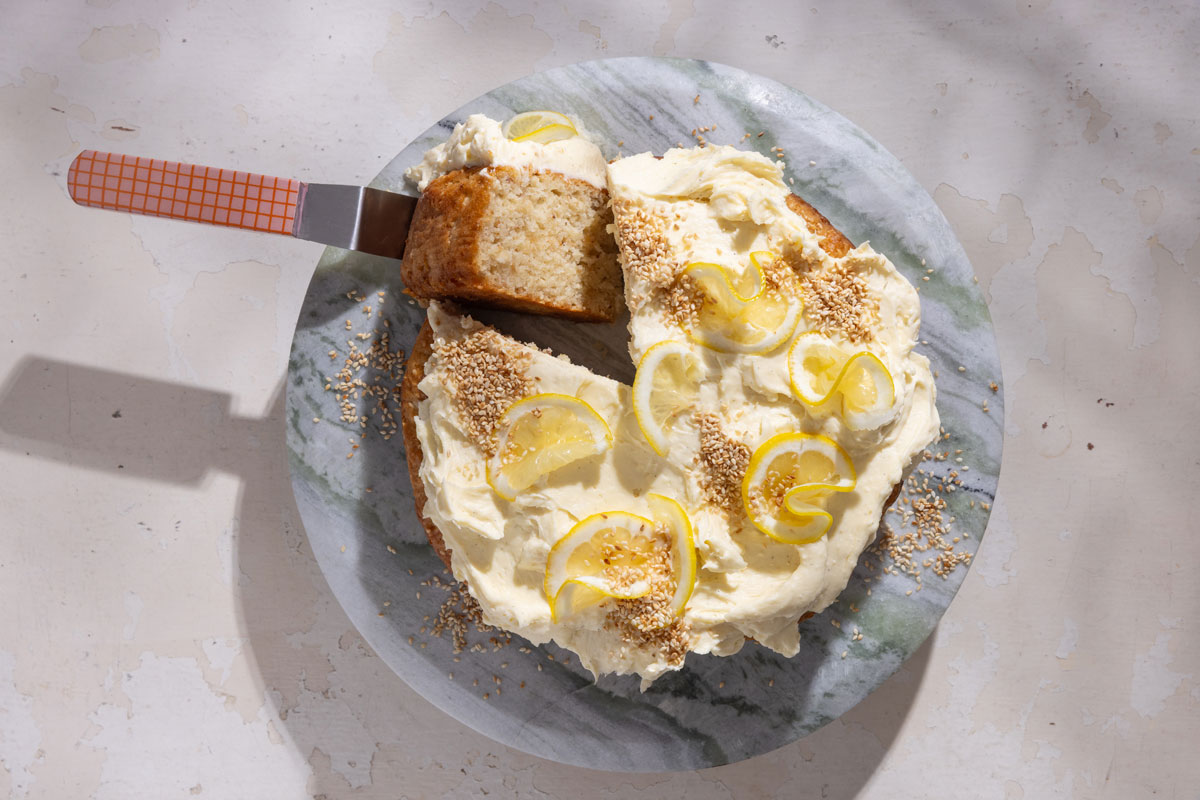
Preserved lemon sesame cake with cream cheese frosting recipe
I love a yoghurt-based cake so much. The yoghurt adds softness and moisture and its acidity is known to have leavening (raising) qualities in bakes. In my recipe, I mix the yoghurt with bicarbonate of soda – this activates the bicarb and gets it to function as an effective raising agent. This cake also has such a tender crumb and a pleasant density to it. If sesame seeds aren’t your thing, try replacing them with almonds, or leave them out completely for a classic lemon cake.
My rating? I give it a 9/10 as a binding and raising agent; also that tang just makes everything you bake with it so much more delicious.
Bananas
Recipe tested: Chai masala banana loaf

Chai masala banana loaf recipe
Who knew banana bread contained bananas as a binding agent? Not me. Although they’re amazing as a binder, they will make everything you bake taste like bananas. Just like in a smoothie. So, if you don’t like bananas, avoid this as a binding agent.
My rating? I’d rate it a solid 5/10. Tough, but fair.
Overall verdict
Baking without eggs is not only possible, but super-easy once you understand the function of each egg substitute. My favourite egg substitute has got to be aquafaba. Light and as airy as ever, it’s also great used in chocolate mousse, providing lightness and a creamy texture.
Additional option: Apple sauce
I didn’t test apple sauce, but I've been told it’s a worthy substitute for eggs. In baking, apple sauce functions as a leaner substitute for fats (like oil or butter) and eggs, primarily by adding moisture and tenderness to baked goods while reducing calories and fat content. Its pectin content limits gluten development, contributing to a softer texture, and the natural sugars and water help to bind ingredients and retain moisture.
Tips for egg-replacement success
- Understand the role of eggs in your recipe. Are they there to lift, bind or moisten?
- Don’t mix up leaveners and binders. Some egg replacements add moisture but won’t help your cakes rise.
- Experiment in small batches before committing to a big bake.
- Check flavour impact. Banana and apple sauce can add noticeable flavour; aquafaba and flaxseed are more neutral.Egg-free baking doesn’t have to mean compromise. With a little trial and error, and the right substitutes, you can bake everything from fluffy cakes to chewy cookies without cracking a single shell. Whether you're plant-based or just looking for a swap in a pinch, these alternatives open the oven door to creativity and inclusivity.


Comments