
Champagne-and-blackcurrant celebration cake
 10
10
 Medium
 30 minutes, plus 4 hours’ or overnight chilling time
 40 minutes
For me, this is the ultimate celebration cake, suffused with my favourite tipple, Kir Royale – Champagne with a drop of crème de cassis (blackcurrant liqueur). It took nine different sponges, three custard creams and five icings (which, if you do the maths, is 135 distinct combinations) to arrive at my ultimate version, which is sumptuous and extravagant. Spoiler: the recipe uses about half a standard bottle of Champagne, which means there’ll be leftovers to reward yourself and an accomplice with for a job well done.
Having asked you to purchase a bottle of Champagne, I didn’t think I could expect you to spring for a bottle of crème de cassis as well. And as it turns out, sieved blackcurrant jam, spread thinly on each of the cake layers and incorporated into the icing, perfectly captures the flavour of my favourite tipple.
Ingredients
Method
-
For the sponge:
- 6 large free-range eggs, separated
- 230 g caster sugar, plus 50 g extra
- 180 ml Champagne (or sparkling wine such as prosecco)
- 100 ml sunflower oil
- 1 t vanilla extract
- ½ t fine sea salt
- 225 g self-raising flour
- 1¼ t cream of tartar For the filling:
- 6 free-range egg yolks (freeze the egg whites for another recipe)
- 110 g caster sugar
- 190 ml Champagne (or sparkling wine such as prosecco)
- 350 g blackcurrant jam
- 220 ml cream For the blackcurrant icing:
- 150 g unsalted butter, at room temperature
- 300 g icing sugar, sifted
- 1 t vanilla extract
- pinch of fine sea salt
- 2 T cream To finish (optional):
- fresh blackcurrants (or other berries) and blackcurrant or mint leaves, to garnish
Method
Ingredients
1. Preheat the oven to 160°C, fan-forced. Line the base of two deep 20 cm round cake tins with baking paper – do not line or grease the sides.
2. To make the sponge, place the egg yolks and 230 g sugar in a large mixing bowl and use a hand-held whisk to mix until light and creamy. Stir in the oil, Champagne, vanilla and salt, then sift in the flour and whisk gently to combine.
3. Place the egg whites in the bowl of an electric mixer fitted with the whisk attachment and whisk at medium-high speed until frothy, about 30 seconds, then add the cream of tartar. Whisk for about 1 minute, until soft peaks form, then, still at medium-high speed, drizzle in the remaining sugar. When all the sugar has been added, increase the speed to high and beat until firm peaks form, about 1 minute.
4. Transfer about one-third of the egg white mixture into the Champagne batter and fold through gently using a large whisk until almost incorporated. Fold in the remaining egg whites, using a light hand to avoid deflating the batter too much, but ensuring the egg whites are fully blended into the batter.
5. Scrape the batter into the two prepared tins (about 560 g each) then, one at a time, drop the tins onto the kitchen counter from about a 20 cm height to break the large air bubbles. Bake for about 40 minutes or until a skewer inserted into the middle of the cakes comes out clean.
6. When the cakes come out of the oven, immediately drop the tins twice on a heatproof work surface from about a 20 cm height – this feels counterintuitive, I know, but it helps to prevent the cakes from sinking in the middle. Place the cakes on a wire rack to cool completely in their tins.
7. While the cakes are in the oven, make the Champagne cream filling. Start by making a Champagne sabayon: place the egg yolks, sugar and Champagne in a medium heatproof bowl and whisk until combined. Set the bowl over a saucepan of gently simmering water, making sure the base of the bowl is not touching the water. Whisk the mixture continually in a figure-eight pattern, making sure the whisk is always in contact with the base and sides of the bowl. When the mixture thickens, after around 5–7 minutes, remove the bowl from the heat but keep whisking (ideally, over a bowl of ice) for another 2 minutes, then whisk occasionally until the mixture is cool. Scrape the mixture into a container and refrigerate until cold – it will be whipped with cream before assembling.
8. Meanwhile, place the blackcurrant jam in a small saucepan over a low heat. Stir regularly until warm, then remove from the heat. Pass the jam through a fine-mesh sieve into a small bowl, pressing firmly to extract as much jam as possible. Discard the solids. This will leave you with approximately 250 g of sieved jam, although it may be a little more depending on the jam. Set aside 50 g of the sieved jam in another small bowl for the blackcurrant icing. The larger quantity will be used to spread on the cake layers.
9. When the cakes are completely cool and ready to be assembled, finish making the Champagne cream filling. Place 220 ml cream in the bowl of an electric mixer fitted with the whisk attachment and beat at medium-high speed until soft waves form. Remove the cold Champagne sabayon from the fridge and add it into the whipped cream. Mix at a low speed until smooth, thick and combined, then place in the fridge.
10. Run a thin, flexible knife or a long metal spatula around the sides of the tins, pressing as close as possible to avoid tearing the cakes. Turn the cakes out and slice them in half horizontally, so that you have four equal round cakes.
11. To assemble, place one of the sponge circles on a serving plate or cake stand. Spread one third (60 g) of the sieved blackcurrant jam evenly over the cake, then spread 165 g of the Champagne cream evenly on top. Place another sponge neatly on top and repeat with the same amount of jam and cream. Continue layering with the remaining two cake circles, ending with exposed sponge on the top layer (without jam or Champagne cream). Wrap the whole cake in plastic wrap and refrigerate for at least 2 hours, or overnight.
12. When the cake has had its time in the fridge, make the blackcurrant icing. Place the butter and icing sugar in the bowl of an electric mixer fitted with the paddle attachment and beat at a medium speed for about 2 minutes, until smooth and creamy. Add the vanilla, salt and cream, then beat at a medium–high speed for another 2 minutes, until light and creamy. Finally, add the reserved 50 g sieved blackcurrant jam and beat at a low speed just to combine.
13. Remove the cake from the fridge and run a spatula around the sides to tidy it up before spreading the blackcurrant icing over the top and sides of the cake. Refrigerate for at least 2 hours or overnight. Garnish with blackcurrants or berries and blackcurrant or mint leaves (optional) before serving.
Preparation and serving tips
Strawberry is a great substitute for blackcurrant in this cake. Indeed, I suspect a strawberry-and-Champagne pairing might be many people’s preference. Simply substitute strawberry jam for the blackcurrant variety. Just make sure to sieve the jam to remove the seeds – this will make it easier to apply onto the delicate sponge layers.
All the elements can be prepared a day ahead. The assembled cake will slice more neatly if it has been refrigerated for at least 2 hours to help the layers meld together.
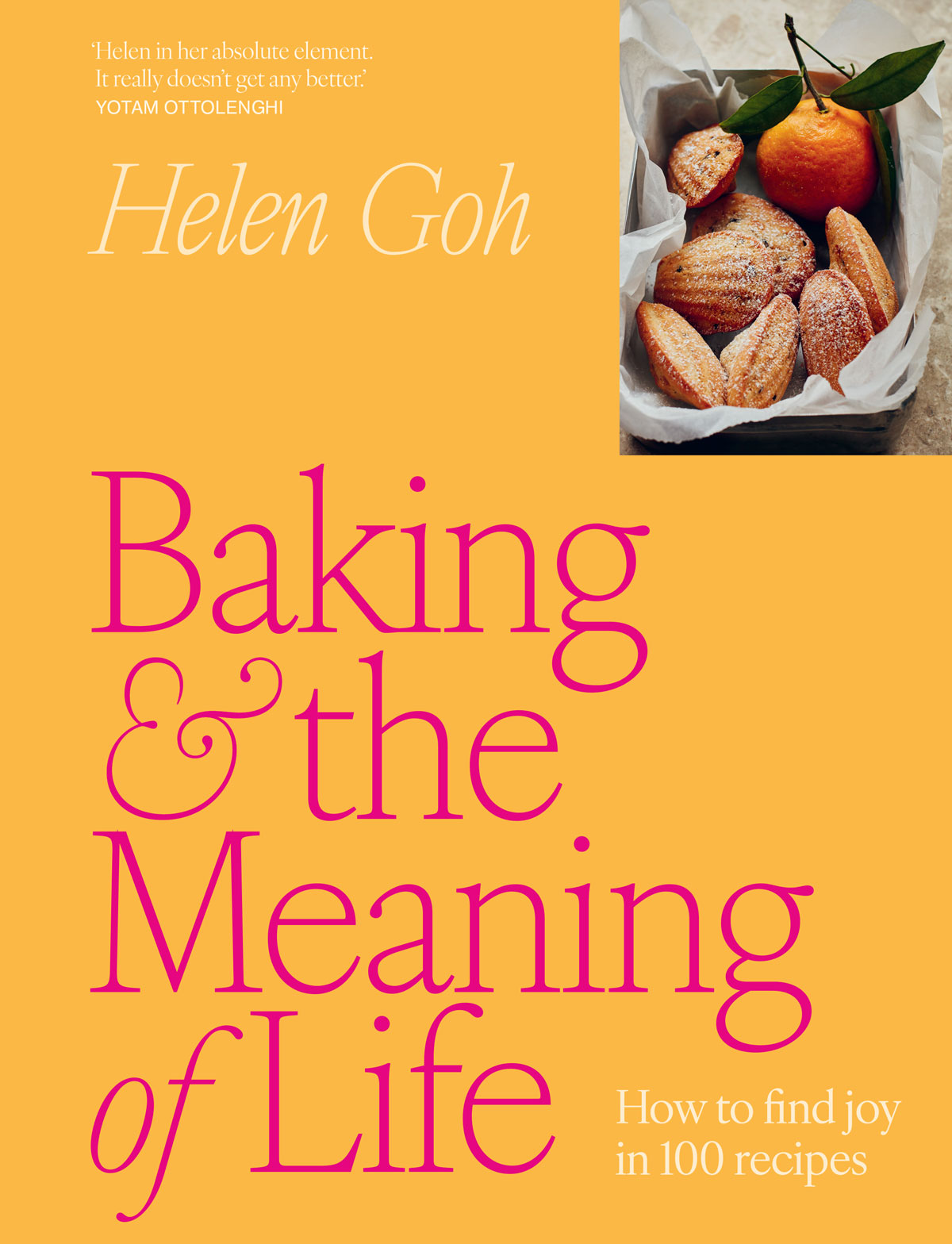
Extracted with permission from Baking and the Meaning of Life by Helen Goh is published by Murdoch Books, £26.00, www.murdochbooks.co.uk

There are no comments yet.


Comments