
What is Dezemba without stokvels?
Growing up in the 90s, December meant one thing: stokvel payouts and the most incredible feasts you could imagine. These savings circles, predominantly run by Black women, transformed our festive season from ordinary to extraordinary. From All-Gold tomato sauce on crispy chips to carefully crafted family trifles, every dish told a story of community, tradition and love.
One December morning in the late 90s, a small delivery truck pulled into my grandmother’s yard. Twenty years on, I can still hear the truck rumbling through the streets of Monyakeng, Wesselsbron. The truck wasn’t merely heavy with groceries and goodies, it brought gossip, noise, cheer and the kind of excitement that turned even the shy aunties into traffic marshals.
Kids like us were sent to the back and told to “keep quiet,” which we did, loudly. My grandmother, Mme Ruta, the calm centre of the storm, stood by the gate with her hands on her hips, half-smiling, half-supervising. She didn’t need to shout, her presence alone kept order.
The women in her stokvel treated the day like a ceremony. Only a few could handle the goods; the rest hovered, supervising and gossiping with the precision of auditors. Someone always suspected someone else’s stack looked bigger. But that was part of the joy. Once that truck arrived, we knew: the season of full pots, fizzy drinks and overfilled plates had begun.
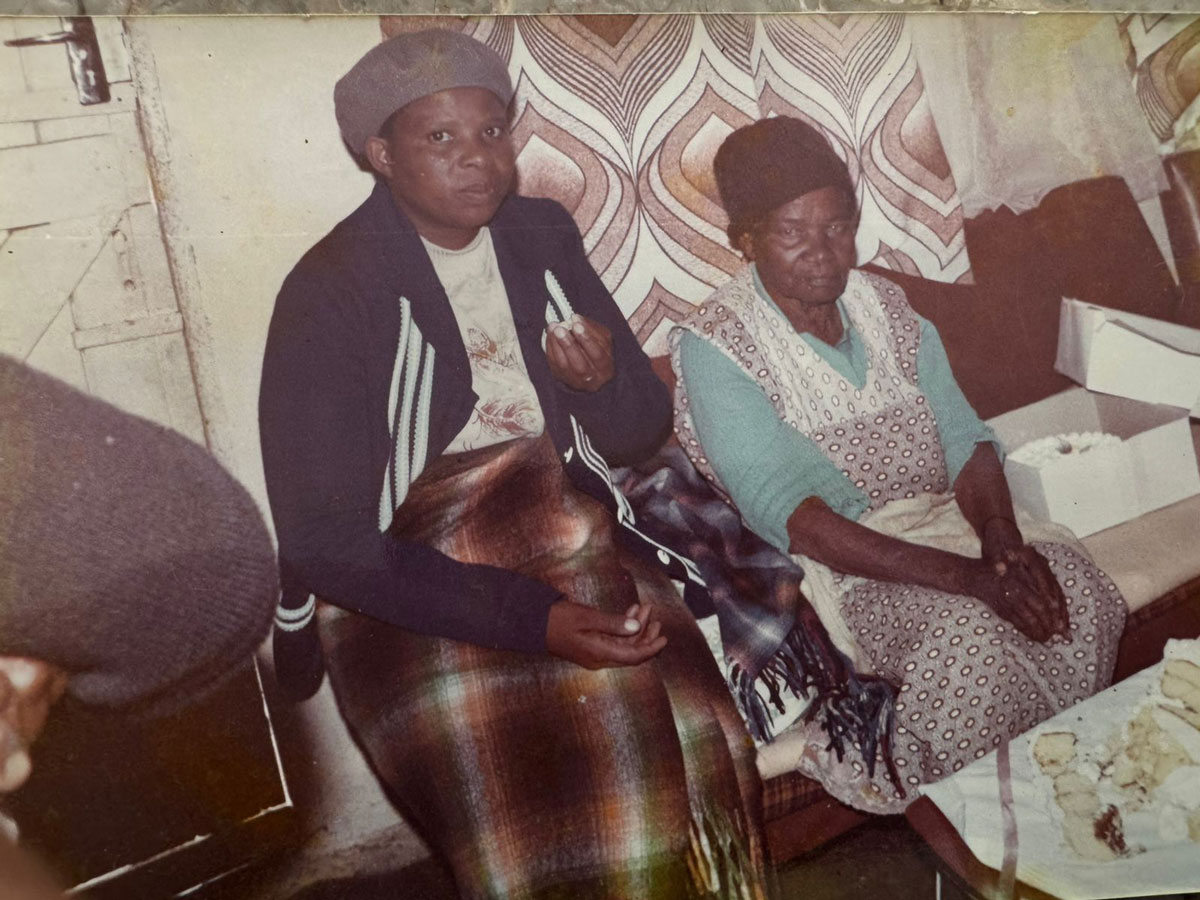 Mme Ruta enjoying cake
How stokvels fed the spirit
Long before banks trusted us with loans or savings accounts, Black women trusted each other. That’s how stokvels began. From kitchen tables, church benches and salon chairs, they were acts of trust disguised as admin. My grandmother’s group met monthly, saving small amounts that turned into something big by December.
For many families, the stokvel payout meant the difference between scraping by and eating like royalty. It meant flour, sugar, oil and margarine – the ingredients of celebration. It meant you could bake without counting teaspoons of margarine or stretch stew without apology.
It was never just about money. It was about dignity. About the comfort of knowing the cupboards would finally be full, the kids would have sweets, and the house would smell like something good was cooking. It was about creating joy from effort, and no one understood that better than our grandmothers.
 Grandparents on the stoep: Mme Ruta and Ntate (my grandfather) enjoying a sunny day on the stoep.
From stokvel to stove
Once the groceries were unpacked, the real work began. The air inside was thick with the smell of butter, ginger and frying oil.
Flour, sugar and butter became trays of biscuits that could have broken a tooth if you didn’t dunk them in tea first. Ground ginger perfumed the room as she made gemmer.
Tomato sauce – All-Gold, obviously – waited patiently for the slap chips to come out of the oil.
Mme Ruta never used a recipe book. She didn’t need one. My mother tells stories of how she’d look into the pantry, pull out whatever was there, and somehow make it taste like something you’d pay for. A magician with a wooden spoon. It’s a gift my mother inherited – that ability to improvise with confidence, to feed a crowd without flinching. We still eat from that inheritance today.
December was her performance season. She’d cook and bake and brew until the whole yard smelled like love. And yes, there was overindulgence. Nobody ate sensibly. Nobody even tried. After a year of tightening belts, December was for loosening them. It was abundance in motion – fried, baked and shared.
And her trifle? The only one I’ve ever tolerated in my life. Everyone else’s was too sweet, too soggy, too something, but hers was perfect. Balanced. Creamy. Confident. Like her.
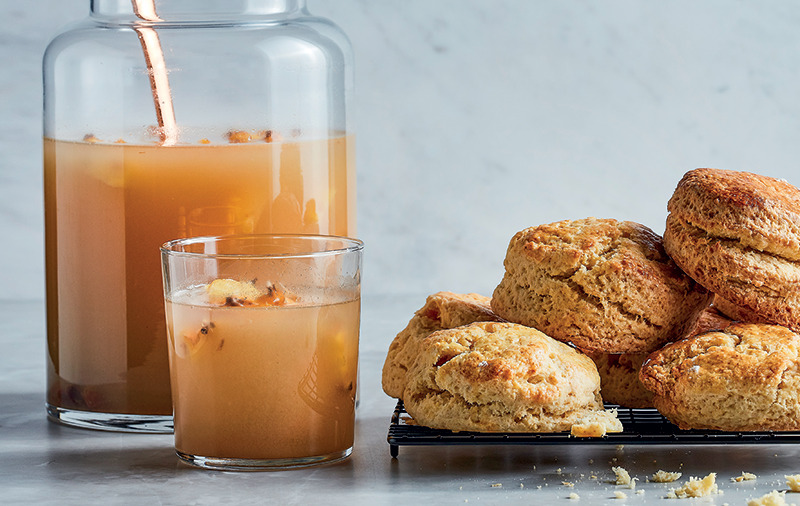
Scones with no-yeast ginger beer recipe
The taste of summer freedom
We had three weeks off school, but it felt like a whole lifetime. The sun refused to clock out. When we weren’t eating, we were walking. Monyakeng was small enough to cover in an afternoon – dust, laughter, endless cousins and aunties who never forgot to ask “Le jele?” (Have you eaten?)
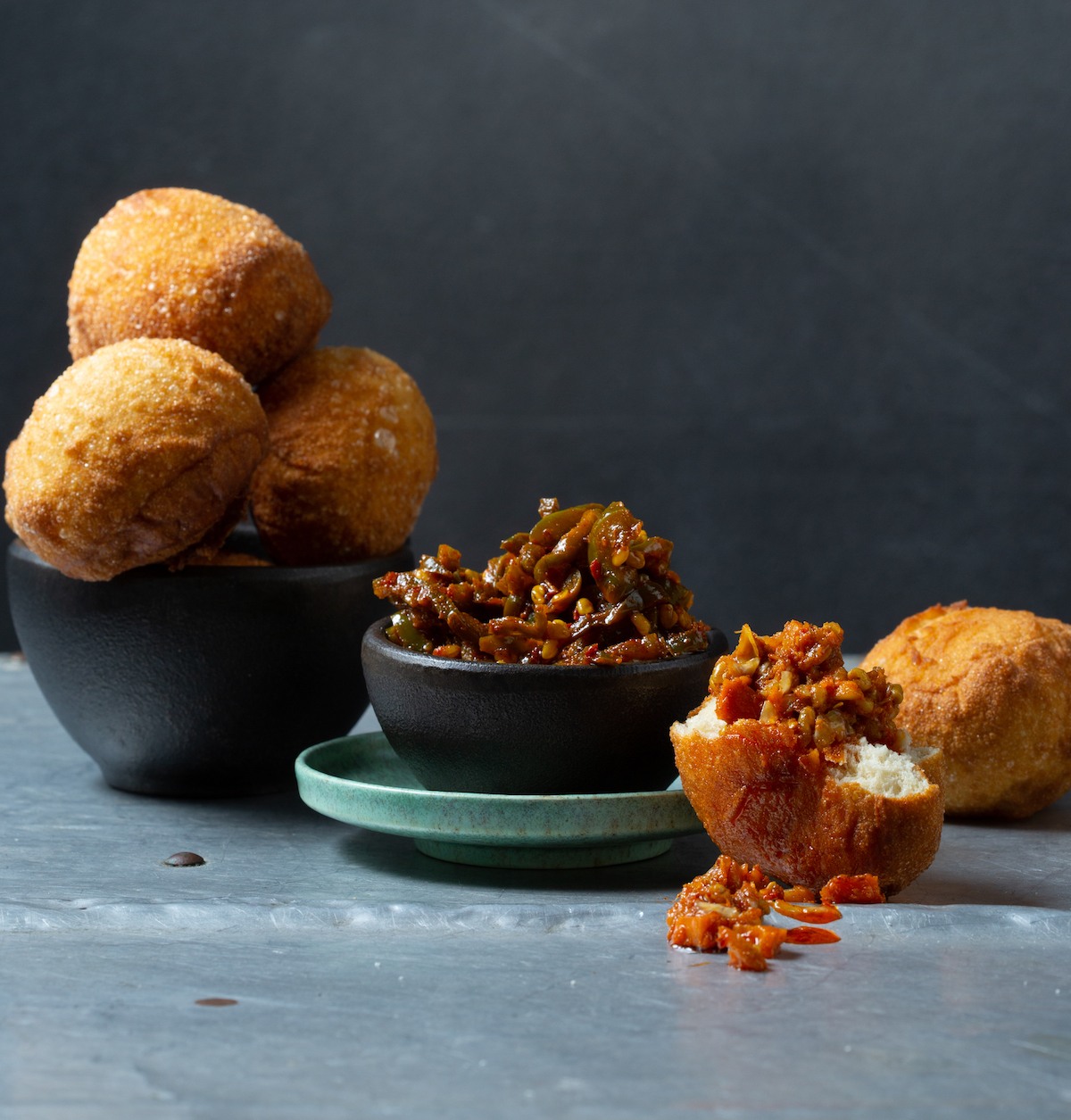
We’d stop by houses for R2 to buy magwinya le atchar, or just for greetings that somehow turned into lunch. Whichever house we landed in at midday, that’s where we ate. No invitations needed, no guilt offered. Just plates, laughter and another helping.
Looking back, food was our love language. It said everything without saying much at all.
The flavour of place
Wesselsbron, like most towns on that side of the Free State, could have been any other. Once you’ve seen one, you’ve seen them all. Rows of matchbox houses, dust curling at the edges of the road, the same flat land folding over the sameveld. Allanridge, Odendaalsrus, Hennenman; copy and paste. One main road, a corner spaza and someone selling watermelon or mielies.
In towns like these, you didn’t need decorations to know it was Christmas. You could feel it. The air was lighter. The music louder. The food richer. It was the kind of collective joy that can’t be manufactured, only cooked into being.
The woman who made it possible
This story begins and ends with her. My Mme Ruta wasn’t only the keeper of the kitchen; she was the pulse of the community. The kind of woman who started a crèche before there was funding, who could turn her house into a gathering spot with nothing more than a pot of traditional beer.
She could whip up a celebration out of thin air and feed everyone who showed up, and somehow there’d still be leftovers. Christmas Day was for family, but any other day could become a feast if she felt like it.
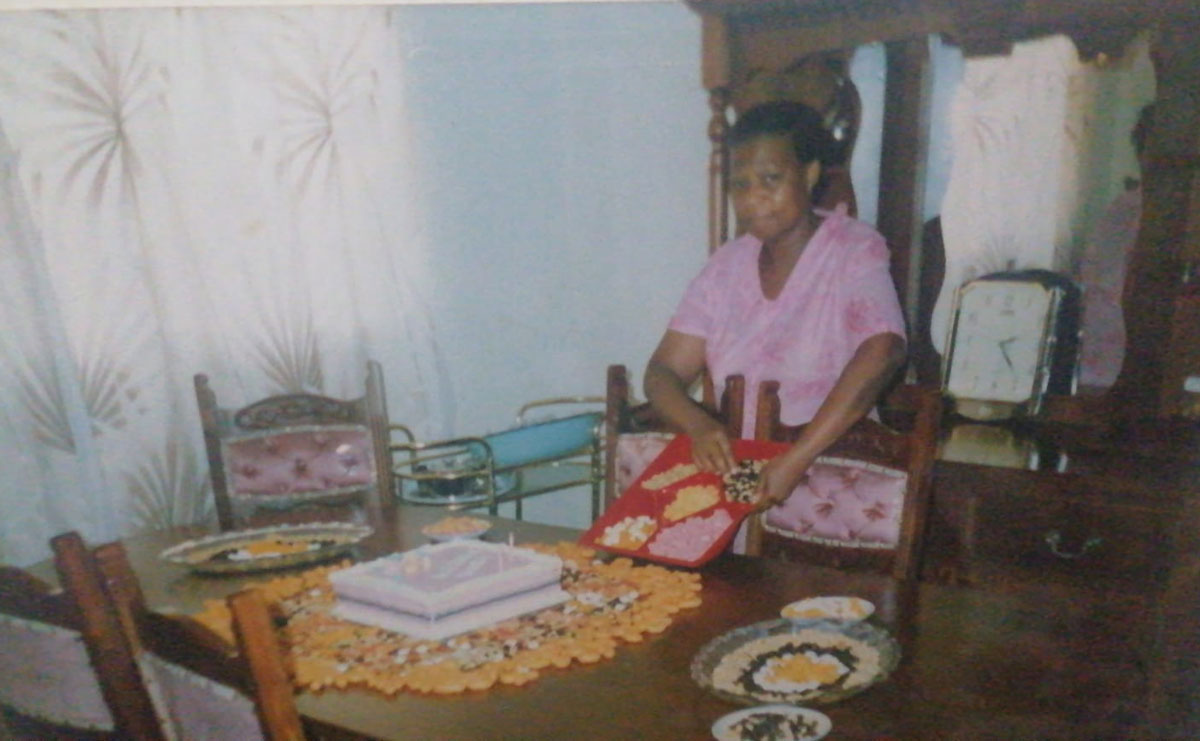 Mme Ruta preparing a birthday spread for one of her grandchildren with the same loving attention to detail that made her Dezemba celebrations so special.
She was that woman. The one who made the ordinary feel sacred, who believed feeding people was a love language all on its own. The woman who passed down recipes you couldn’t find in a book because they lived in her hands, her eyes, her rhythm.
What stays with me
Even now, when I open a tin of ginger biscuits or catch that sharp smell of gemmer in the air, I’m right back there; sitting on the ground as the stokvel truck pulls in, watching women turn ordinary groceries into feasts.
It’s funny, the things that stay with you. The sound of a truck reversing. The taste of tomato sauce on hot chips. The hum of aunties counting bags of sugar like accountants of joy. I used to think the taste of Christmas was gemmer and biscuits. Turns out, it was something richer, a legacy that started in my grandmother’s kitchen. A flavour made of generosity, laughter and the kind of overindulgence that comes from finally having enough.
That’s the real taste of December. And it still lingers.


Comments