
Imbeleko: The meaning of food in the ritual
What’s your earliest food memory? In the latest in our series of columns around South African food and tradition, Abonga Xoki reminisces about the Xhosa and Zulu ritual of Imbeleko, and the meaning of the meat that accompanied it.
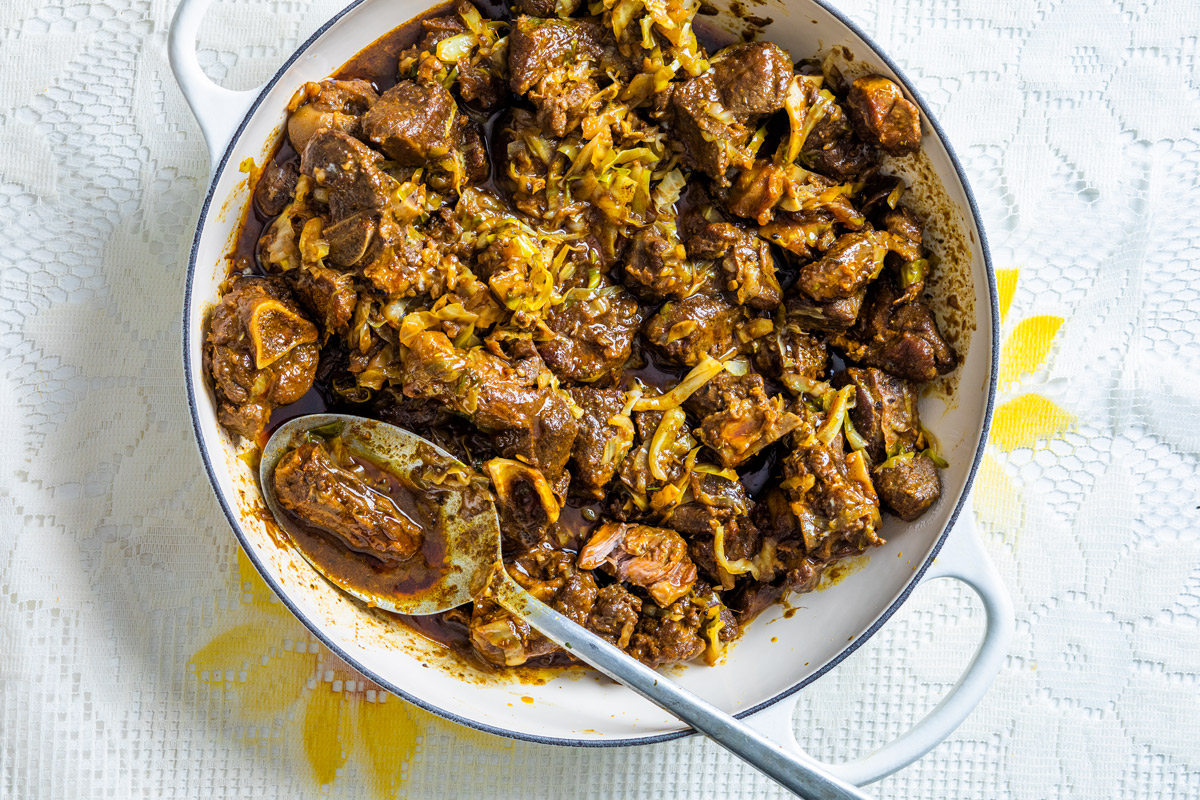
The smell of goat’s meat cooking over an open fire is one of my earliest memories, even before I understood what imbeleko was. My mother tells me that when I was around three years old, after the cooking was done and the elders sat talking as the fire slowly died down, I would wander off into the yard and gather empty tins, fill them with soil mixed with water and line them up as if I were preparing a meal of my own. I would stir carefully and announce, with the seriousness only a child can muster, that I was cooking goat’s meat in a three-legged pot.
The elders would laugh and claim I was ready for imbeleko.
What is Imbeleko?
Imbeleko is a ritual ceremony that formally introduces a child to their ancestors, acknowledging their place within a family’s lineage. It is not a celebration in the conventional sense, but a moment of grounding, a way of saying this child is here, and they belong. Traditionally, it takes place in early childhood though the timing can vary depending on circumstances within the family. What matters most is not age, but readiness and intention.
When I eventually took part, when I was around four years old, I had no understanding of rites of passage or ancestral introductions. I didn’t know the language for lineage or belonging. But somehow, even in play, I was repeating what I had witnessed. The fire. The pot. The goat’s meat. The patience.
The ceremony unfolds around endlini enkulu, the main house (usually a hut or rondavel) that holds spiritual and familial significance. This is where elders gather, where conversations with ancestors are led, and where instructions are followed carefully.
What we eat
Meat, particularly goat’s meat, holds deep significance on this day because it is understood as a medium of communication. It is offered, cooked and shared with intention.
The food shared at imbeleko is prepared traditionally, without the distraction of elaborate sides or colourful salads. The focus is always on the meat itself; cooked simply, honestly and with respect to what it represents.
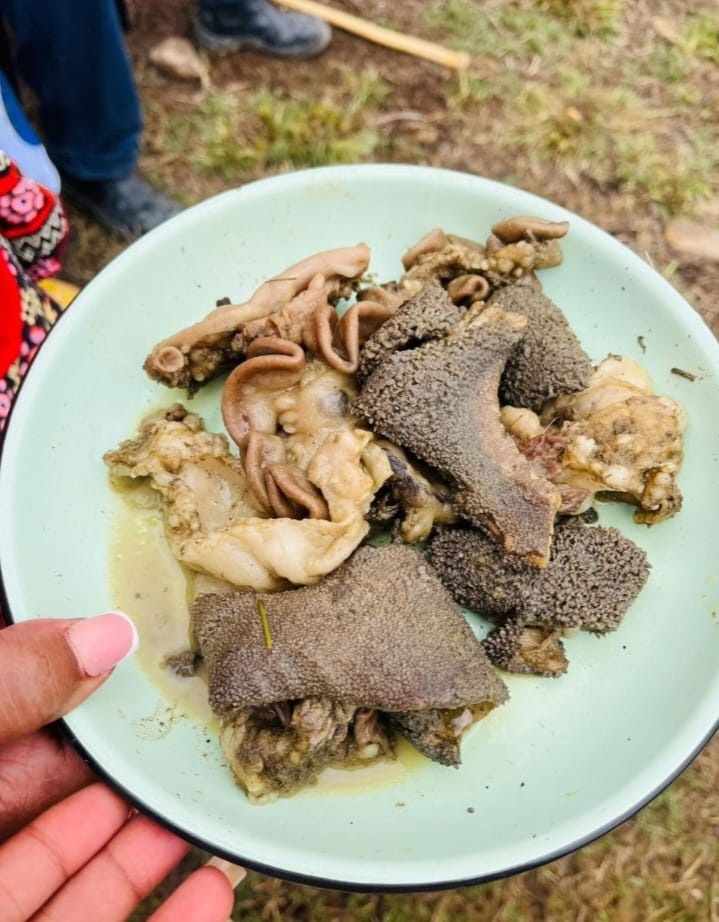
There is tripe, carefully cleaned and slow-cooked, its smell unmistakable and familiar to anyone who has grown up around such ceremonies. The goat’s meat is spooned generously into a large enamel plate, placed at the centre of the gathering, and shared. No frills, no garnish, just meat. Eating is not rushed. It is done with awareness of who cooked it, why it was cooked, and who it was cooked for first.
Umngqusho omhlophe does not announce itself with fanfare. It is prepared in advance, or sometimes on the morning of the ceremony, cooked slowly and served without decoration. Its plainness is its meaning. At ceremonies, it reminds the family that nourishment, respect and tradition do not need embellishment – just patience, care and presence. For the Xhosa people, umngqusho omhlophe carries the language of humility and is a traditional dish enjoyed in most ceremonies.
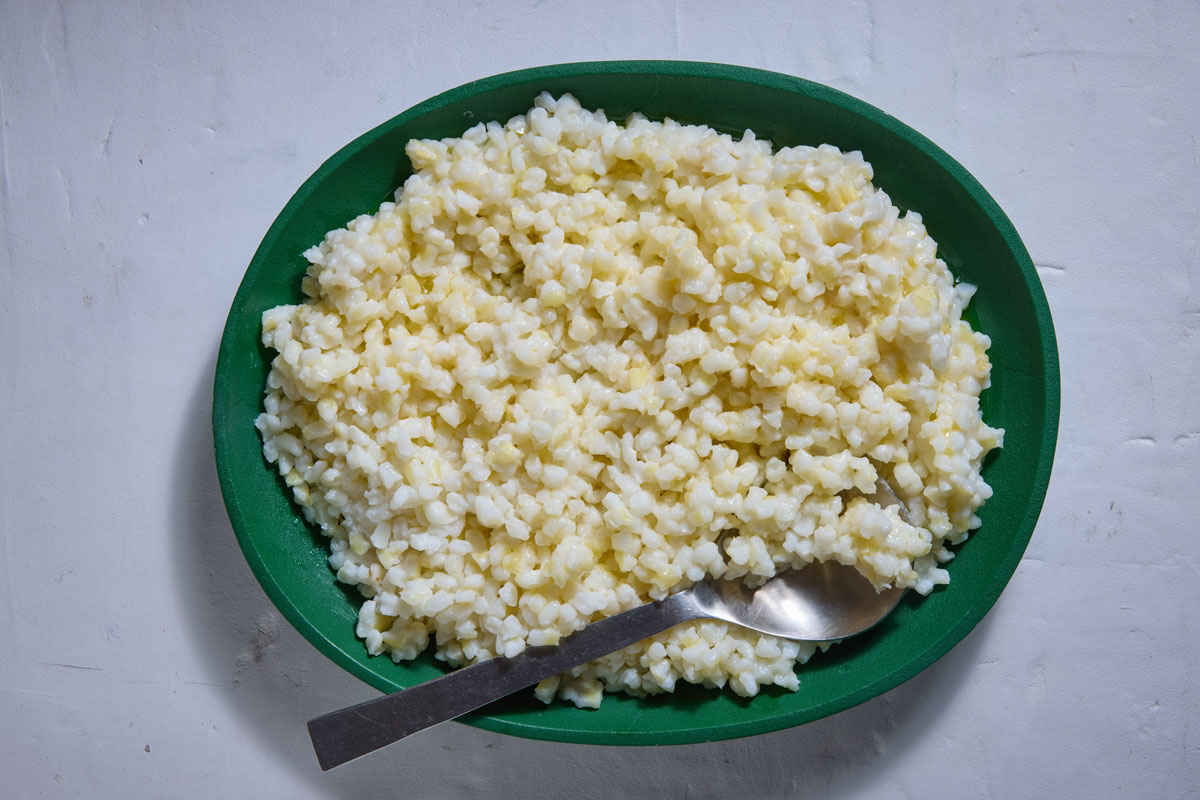
White samp (umngqusho omhlophe) recipe
During imbeleko, the yard becomes both the kitchen and the sacred space. Elders sit endlini enkulu (which is the focal point of the ritual), while nearby the pots do their quiet work. Children play around the yard, absorbing more than they realise. The ritual and the cooking happen side by side, reminding you that food is one of the ways we speak to those who came before us.
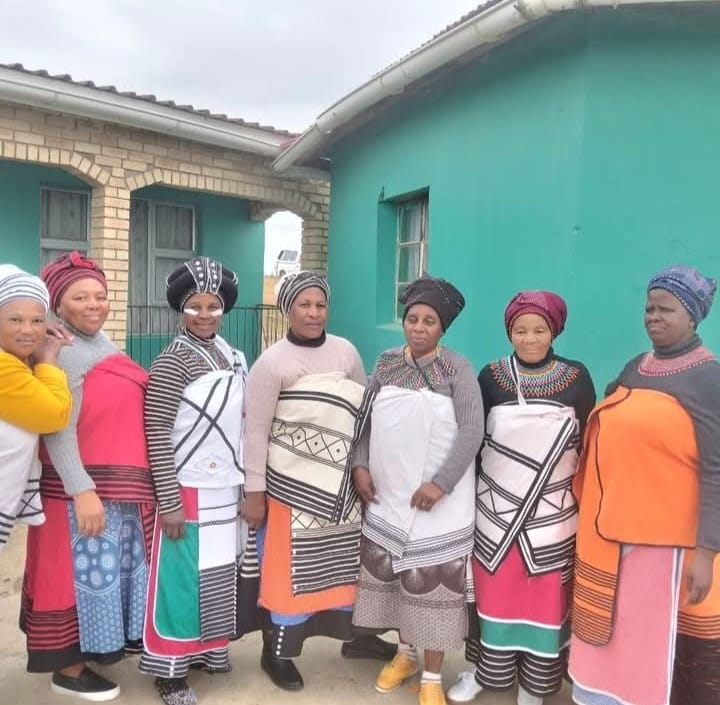
I recently returned home for my one-year-old nephew's imbeleko – the age varies and things are done differently in different parts of the Eastern Cape. He is usually a fussy baby but on that day he was calmer. To see how everything plays out, now that I am much older and have a bit of understanding, was quite beautiful.
Looking back now, I understand why the elders laughed at me that day. Not because I knew what imbeleko meant, but because I already belonged to it. Even in pretend cooking, even with tins filled with mud, I was rehearsing something I had already witnessed. Long after the fire had cooled and the enamel plate was cleared, that lesson stayed with me: some meals are not about being fed, they are about being introduced.

Comments