
How to eat to lift your mood
This will not be a piece convincing you to go on a special diet or to detox, but hopefully it will inspire you to eat in ways that actively help you feel more balanced, calm and clear-headed.
“Healthy” or “guilt-free” aren’t words I like to use. It feels as though, over time, the guise of what good health is has become weaponised and used to criticise people who don’t adhere to a standard of eating that’s deemed “correct”. There isn’t one specified way to eat well or to look after yourself; it’s different for everyone. Now, I’m not a dietitian, but in the capacity, I have as an informed cook, I can use some of my personal experience with food as a guiding light on what foods have really been helpful in managing my state of mind and, essentially, lifting my spirits.
You’ve probably heard people talk about food with potential mood-lifting benefits. And if you really know a thing or two, you’ll know I unfortunately don’t mean mood-improving in the fried chicken and speckled eggs sense. Eating with your well-being in mind doesn’t always seem like a lot of fun. People often point to ingredients that they either don’t have in their refrigerators, can’t afford (I’m looking at you, Norwegian salmon) or foods they can’t batter and deep-fry. But with a little bit of research, eating for the benefit of the heart and mind can be both accessible and affordable. Start eating with only the best intentions and watch your energy levels (and mood) begin to shift for the better.
Choose gut-health warriors

Mabele ya ting from scratch recipe
I like to describe the gut (the entire digestive system – not limited to your stomach) as the convention centre of the body; a part of the body that deserves the most care, because it’s directly linked to your mood and overall bodily function. There are many tasty foods that are rich in probiotics, the bacteria that keep your gut happy and balanced. Fermented foods such as amasi, fermented porridge (ting and fermented maize meal), unsweetened yoghurt, kimchi, miso, kefir and kombucha all assist with this vital function. Since approximately 90% of serotonin is produced in the gut, a healthy digestive system can literally help improve your mood from the inside out.
Affordable fishy options
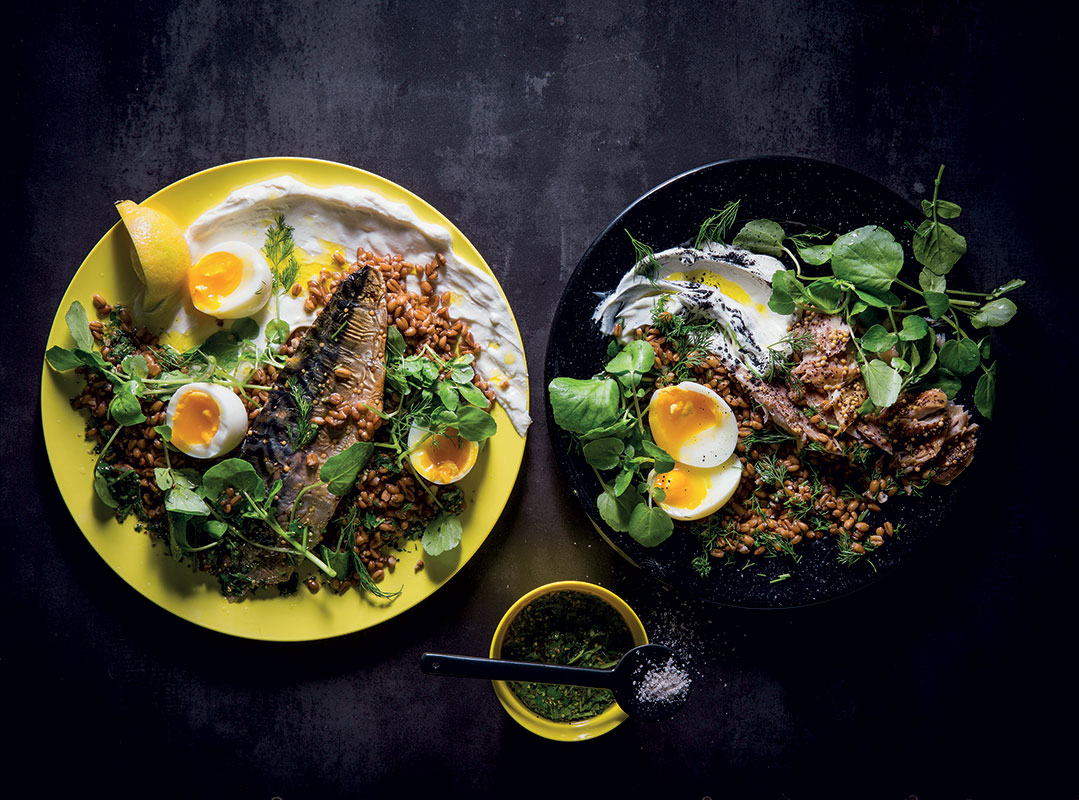
Pilchards, salmon, sardines and mackerel are loaded with omega-3 fatty acids (fats that help brain cells communicate more efficiently). Studies have linked omega-3s to lower rates of anxiety and depression, and they’re also great for focus and memory. If you’re trying to find a way to cram some of the foods on this list into one delicious meal, try this peppered mackerel salad – I highly recommend Woolies’ smoked peppered mackerel which is ready to eat. Serve on toast or assemble this easy salad which is ideal in a lunchbox.
Follow this egg-cellent advice

Sweetcorn scrambled egg tortillas
Eggs contain high levels of vitamin B12 and choline, two nutrients that are essential for brain health and energy. They also contain tryptophan, an amino acid your body uses to make serotonin, the “feel-good” chemical that helps regulate mood. Boiled eggs are probably your best bet because there are no added fats required to prepare them, making them naturally lower in calories. But there's nothing wrong with a couple of buttery scrambled eggs in a wholewheat tortilla every now and again. Cook this recipe for my tortillas crammed with buttery eggs and avocado.
Go nuts about nuts
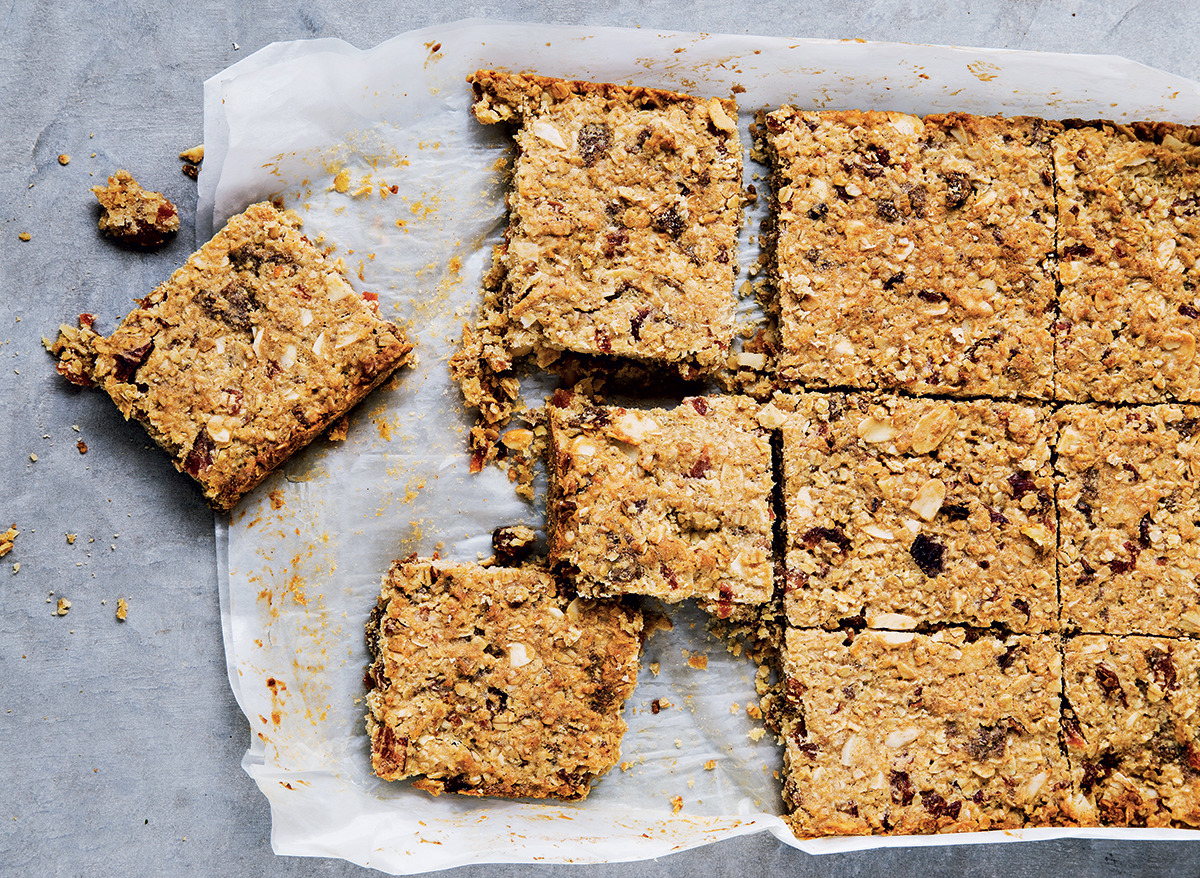
Good intention granola squares
Tiny, but nutrient-dense, nuts and seeds like almonds, walnuts, and pumpkin seeds contain magnesium, a mineral that helps regulate stress and support better sleep. They also provide healthy fats, fibre and plant protein that keep you fuller for longer (and less likely to snap at 4 pm). They’re a great snack to keep around and incorporate into your meals in creative ways – Woolies makes a nut and seed salad sprinkle that you can toss over pretty much anything. I love it shaken over ripe tomatoes, roasted butternut, or even in a sandwich. Shop it right here.
I would also suggest an easy recipe like these aptly named ‘good-intention granola bars’: a lunchbox winner and a lovely snack to have with that afternoon cup of tea. I know I keep referencing lunchboxes, but it’s a fact that we spend the greater part of our time at work or school, and these environments can get stressful, so it’s more important than ever to be able to eat foods that will keep your body co-operating, and your mind in check.
If using peanut butter, try and select one that’s salt and sugar free, or if you’re an overachiever, make your own!
Go bananas
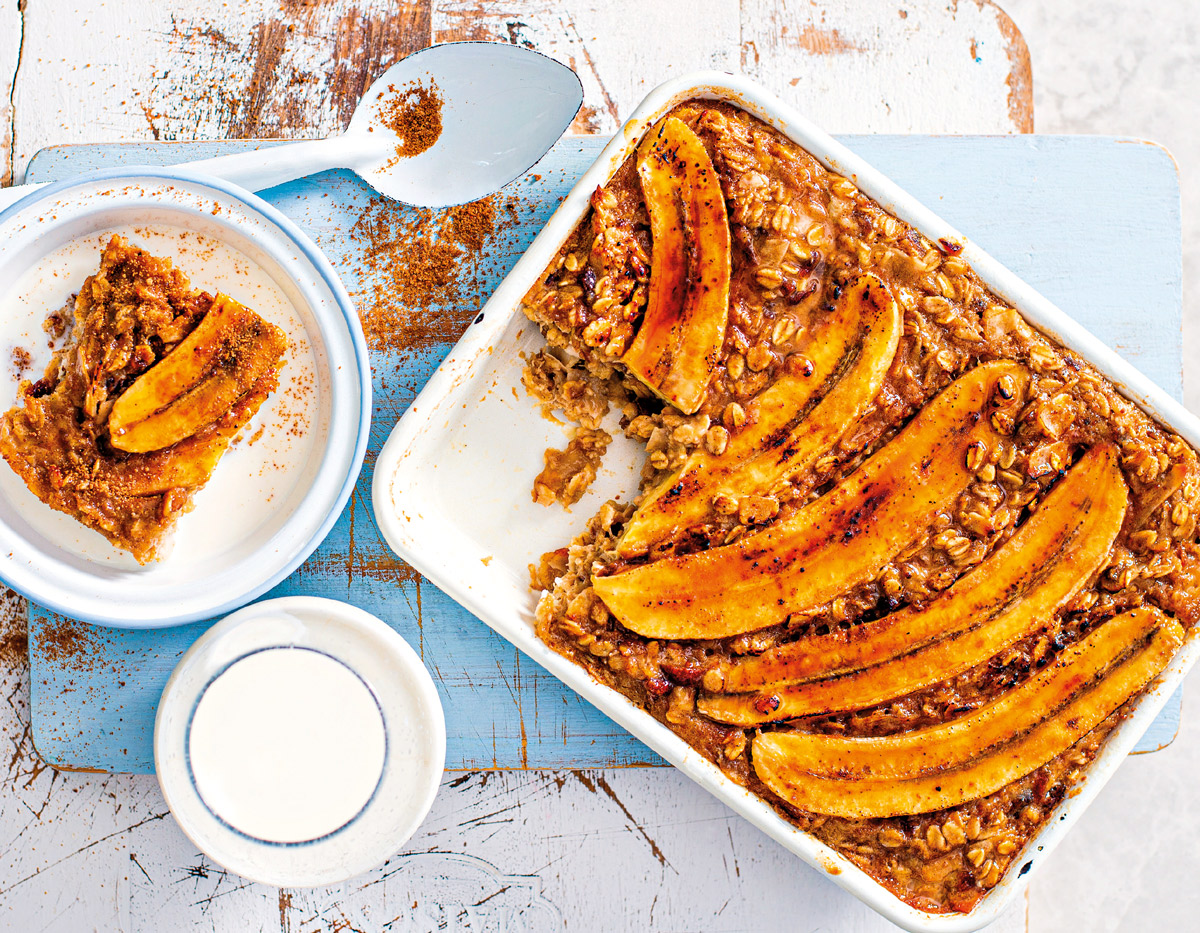
Bananas are nature’s energy bar. They’re the fastest breakfast and easiest snack ever created. Slicing bananas into porridge or cereal with a handful of dried cranberries and coconut shavings is my favourite way to enjoy them. They’re rich in vitamin B6 (which helps your body make serotonin and dopamine) and contain natural sugars that give a gentle, sustained energy lift. No sugar crashes to be found here. They also are rich in potassium, which helps regulate sleep – a vital part of being well is getting enough uninterrupted sleep. Of course, they won’t cure insomnia, but they will tide you over sustainably until your next meal. I don’tthink I know anyone who can resist a warm slice of buttered banana bread, though. Eaten in excess, it may not be the most beneficial way to get those nutrients in, but must be by far the tastiest. Here’s a smart breakfast idea from Siba Mtongana: a recipe for banana oatmeal bake, whole foods made more fun to eat.
Slow-burning carbs are the way to go

Oats, brown rice and quinoa are nutrient powerhouses, providing magnesium, iron and selenium, which may be helpful for energy, bone health and metabolism. They’re also rich in B vitamins (thiamin and niacin), which are natural stress busters that support your nervous system. I couldn’t pick my favourite grain or oats recipe, so I’ll suggest a few. My Turkish delight oats, as controversial as it may have been online (some were afraid it may contain too much sugar, but the sweetness can be adjusted to your personal taste, and the addition of sugar is entirely up to you). Plus, it contains two of the recommended mood-lifting foods I’ve listed in this piece. Read on to find out what that other food is...
But if the thought of chocolate in the morning makes you a little nervous, add Hannah Lewry’s beetroot quinoa bowl to your Sunday lunch spread – it's a great middle-of-the-table salad with all sorts of good things that she’s made exceptionally delicious.
Berries are good for you
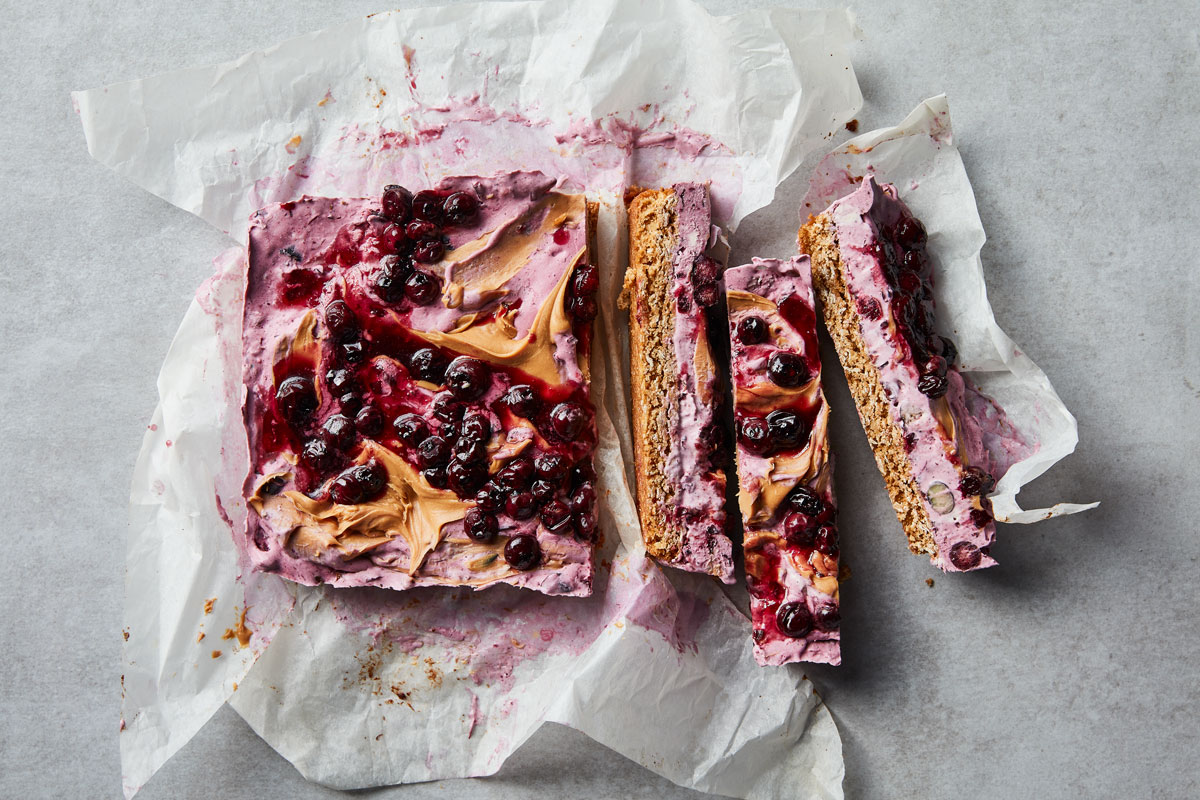
Frozen peanut butter-and-blueberry bars
Loaded with antioxidants like vitamin C and flavonoids, berries, particularly blueberries,may help protect brain cells from stress and inflammation.Regularly eating blueberries has been shown to improve memory and cognitive function, especially in older adults. Their antioxidants may help increase blood flow to the brain and may protect against some neurodegenerative conditions, such as Alzheimer’s and Parkinson’s disease. They’re also hydrating, refreshing, and easy to add to breakfasts, smoothies, or salads. I love this recipe for blueberry and peanut butter bars, because not only is it a huge treat, it also covers some of the foods that I’ve listed so far!
In the dark
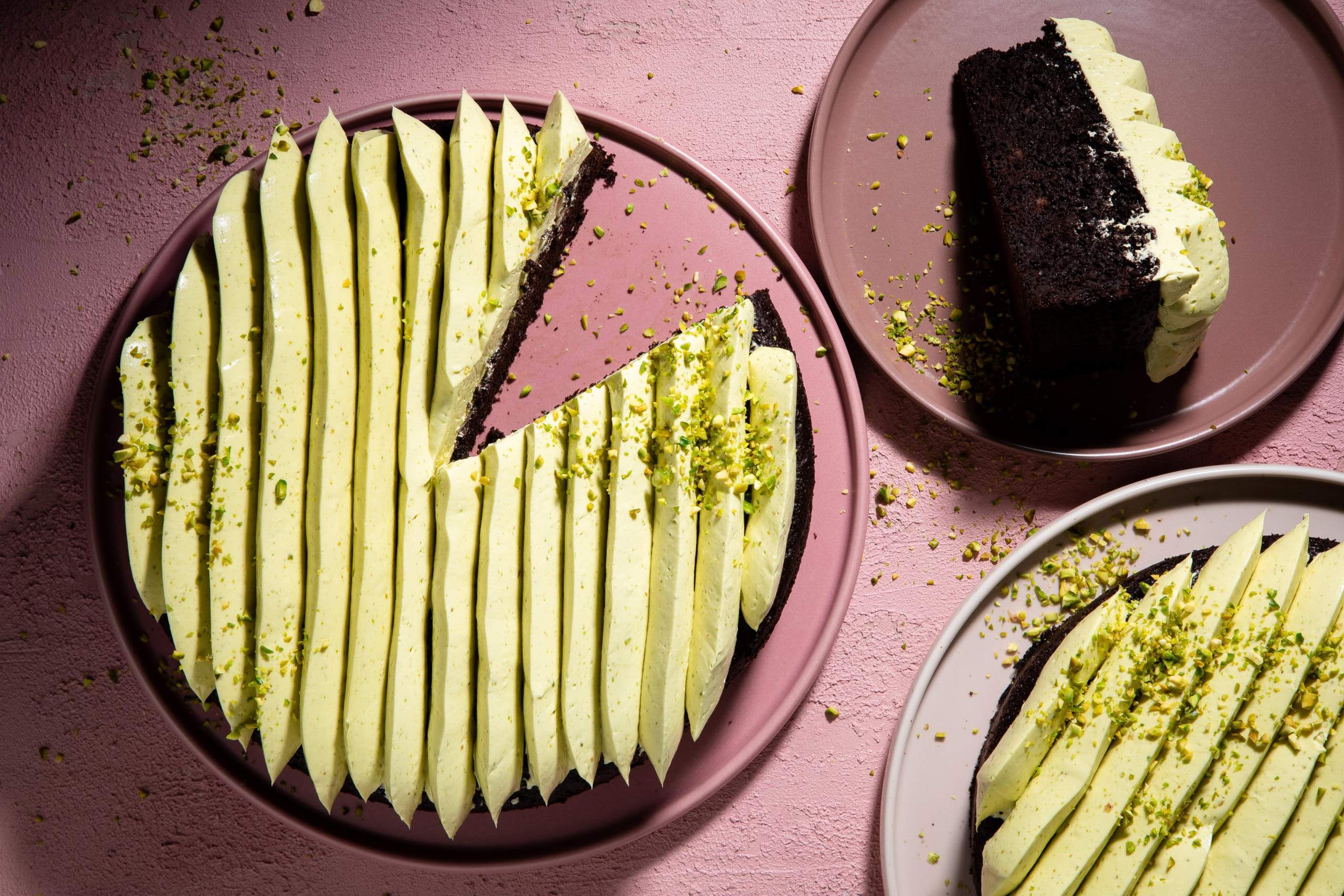
Chickpea dark chocolate cake recipe
If you love chocolate and can’t stop eating it, a good idea might be to switch over to the dark side. Chocolate that contains 70% cocoa or higher contains compounds that may boost endorphins and serotonin. It’s also rich in magnesium, which can help the body relax. Just a few squares are enough to give you a lift, but like with all things good, moderation is key. Eating a whole slab isn’t going to solve your problems, but I’ll admit it puts them on hold, even if for a moment. I love this recipe for chickpea dark chocolate cake by Bianca Strydom.
Eating with intention
Eating better food is part one of the road to a better you, but it’s not the only thing you can do. It’s not only what you eat, but how you eat it. Slowing down, eating mindfully, and taking time to really taste and enjoy your meals can have a big impact on how satisfied and balanced you feel. A relaxed body digests food better, and a happy gut sends better signals to the brain. Also (and I know this one is hard) try not to eat in front of the TV or while scrolling on your phone, because it distracts your mind from the good meal you’re having, and it makes it easier to wolf down your food, making digestion a bit of a struggle.
READ: Trending buzzwords decoded: What are somatic, intuitive and mindful eating?
It’s a food that makes you feel good and does good – from a banana in your bag, a handful of blueberries to a bowl of miso soup on a rainy day, it’s often the simplest things that make the most difference. Eat well, and your mood will likely follow. These foods nourish both body and mood through steady energy, calm focus, and real satisfaction. Of course, a treat is allowed and encouraged but try to incorporate some of the foods on this list where you can. Happy eating!


Comments